Showing posts with label Levitical. Show all posts

Sunday, November 8, 2026

Are we Obligated to Tithe Today? The Laws of Moses regarding Tithing


Picture source:  Wikipedia God the Father, Cima da Conegliano, c. 1510–1517


Our Father in Heaven commanded the Israelites to tithe. Tithing included agricultural produce such as grain, wine, oil, and fruit. Livestock was also tithed; every tenth animal passing under the shepherd’s rod was considered holy to the Lord. First we will review all the Laws of Moses regarding tithes and then address the question as to whether we are required to pay tithes today.

According to the Laws of Moses, the ancient Israelite tithing system is understood to have three different types of tithes.


1.     The Levitical Priesthood:  A tenth of all produce and livestock was given to the Levites because they received no land inheritance in Israel.  A tenth of what they received was given to the set apart priests that were descendants of Aaron; this was called the ‘tithe of the tithe’.

2.     Festival Tithes:  A tenth of produce and livestock was set aside annually by families to be brought to Jerusalem three times a year for feast day celebrations.  These tithes were to be eaten before our Father in Heaven. The law mentions bringing a tenth of your grain, new wine, olive oil, and the firstborn of your herds and flocks.  The goal was for each family to get together with other Israelite families and celebrate before the Lord all together.

3.     Third Year Tithe or Poor Tithe:  A tenth was collected of produce and livestock every third and sixth year to feed the Levites, sojourners (who had no land rights), orphans and widows locally.  Since the 7th year was a land Sabbath, the 3rd and 6th years of this cycle is when this tithe was collected. 


The tithing system followed the Sabbatical seven-year cycle. The seventh year was known as the year of release or Jubilee year of release. During this year, the land rested, no tithes were collected, and debts were forgiven. After this, another seven-year cycle began.  The Sabbatical cycle for giving the three types of tithes was as follows:


  • Years 1, 2, 4, and 5: Israelites gave the Levitical Priesthood tithe (10%) plus the festival tithe (10%), totaling 20%.
  • Years 3 and 6: Israelites gave the Levitical Priesthood tithe (10%), the Festival Tithe (10%), and the Third-Year Tithe (10%) totaling a 30% tithe for these years.
  • Year 7, Jubilee Year, Sabbath Land Rest: The land lay fallow, and regular agricultural tithes were not collected.


The word tithe is translated from the following words:

·       Greek word G1181 dekatē, meaning a tenth, that is, as a percentage or (technically) tithe

·       Latin word decimae meaning tithe, tenth part

·       Modern Hebrew word H4643 ma`aser, meaning tenth part, tithing


Abraham’s Tithe to Melchizedek

The first-time tithing is mention is in Genesis when Abram gave a tenth of the spoils and plunder recovered after defeating Kedorlaomer and the allied kings to rescue his nephew Lot. By giving a tenth of the spoils, Abraham publicly acknowledged that his victory and rescue of Lot came entirely from "God Most High, Possessor of heaven and earth."


“And Melchizedek king of Salem brought out bread and wine. (He was priest of God Most High.) And he blessed him and said, “Blessed be Abram by God Most High, Possessor of heaven and earth; and blessed be God Most High, who has delivered your enemies into your hand!” And Abram gave him a tenth of everything.” ESV Gen 14:18-20


“For this Melchizedek, king of Salem, priest of the Most High God, met Abraham returning from the slaughter of the kings and blessed him, and to him Abraham apportioned a tenth part of everything. He is first, by translation of his name, king of righteousness, and then he is also king of Salem, that is, king of peace. He is without father or mother or genealogy, having neither beginning of days nor end of life, but resembling the Son of God he continues a priest forever. See how great this man was to whom Abraham the patriarch gave a tenth of the spoils! And those descendants of Levi who receive the priestly office have a commandment in the law to take tithes from the people, that is, from their brothers, though these also are descended from Abraham. But this man who does not have his descent from them received tithes from Abraham and blessed him who had the promises. It is beyond dispute that the inferior is blessed by the superior. In the one case tithes are received by mortal men, but in the other case, by one of whom it is testified that he lives. One might even say that Levi himself, who receives tithes, paid tithes through Abraham, for he was still in the loins of his ancestor when Melchizedek met him.” ESV Heb 7:1-10


An Ephah & Hin Measure

Tithing was measured, in the verses below, mostly by an ‘ephah’ which was an ancient Hebrew dry unit of volume.  An ephah is approximately equal to these dry volume measurements:

  • Bushels: ~0.62 bushels (about 3/5 of a bushel)
  • Pecks: ~2.5 pecks (or exactly 3 pecks according to some historical context)
  • Dry Quarts: 24 dry quarts
  • Dry Gallons: ~5 dry gallons


The measuring unit for oil was a ‘hin’.  A hin equals about 1.5 US gallons. 


Tithing Law

The verses below established the laws regarding the tithe (a tenth part) of produce and livestock in ancient Israel.  The text begins by stating that a tenth of the land’s seed and fruit does not merely get offered to our Father in Heaven; it already belongs to Him. We honor our Father in Heaven by giving HIM the tithe since he is the true owner. 


“Every tithe of the land, whether of the seed of the land or of the fruit of the trees, is the LORD's; it is holy to the LORD. If a man wishes to redeem some of his tithe, he shall add a fifth to it. And every tithe of herds and flocks, every tenth animal of all that pass under the herdsman's staff, shall be holy to the LORD.  One shall not differentiate between good or bad, neither shall he make a substitute for it; and if he does substitute for it, then both it and the substitute shall be holy; it shall not be redeemed.” ESV Lev 27:30-33


Offerings for Vows, Freewill or Feasts

These offerings required a grain offering of fine flour mixed with oil. The tithe required was different depending on which animal was being offered. One tenth of grain was required for a lamb. A ram required two tenths of grain. A bull required three tenths of grain.


“Speak to the people of Israel and say to them, When you come into the land you are to inhabit, which I am giving you, and you offer to the LORD from the herd or from the flock a food offering or a burnt offering or a sacrifice, to fulfill a vow or as a freewill offering or at your appointed feasts, to make a pleasing aroma to the LORD, then he who brings his offering shall offer to the LORD a grain offering of a tenth of an ephah of fine flour, mixed with a quarter of a hin of oil; and you shall offer with the burnt offering, or for the sacrifice, a quarter of a hin of wine for the drink offering for each lamb.” ESV Num 15:2-5


“Or for a ram, you shall offer for a grain offering two tenths of an ephah of fine flour mixed with a third of a hin of oil. And for the drink offering you shall offer a third of a hin of wine, a pleasing aroma to the LORD.” ESV Num 15:6-7               


“And when you offer a bull as a burnt offering or sacrifice, to fulfill a vow or for peace offerings to the LORD, then one shall offer with the bull a grain offering of three tenths of an ephah of fine flour, mixed with half a hin of oil.  And you shall offer for the drink offering half a hin of wine, as a food offering, a pleasing aroma to the LORD.” ESV Num 15:8-10


Levitical Tithing Laws

The laws below show that the Israelites had to tithe 10% to the Levites and then the Levites gave 10% of this to the sons of Aaron in Jerusalem. 


Tithes for the Levites

Our Father in Heaven stated that all the tithes in Israel were to be given to the Levites as their inheritance because they received no land allotment like the other tribes.  The tithes were given as wages in return for their physical and spiritual labor serving at the tent of the Tabernacle.


“And the LORD said to Aaron, “You shall have no inheritance in their land, neither shall you have any portion among them. I am your portion and your inheritance among the people of Israel.  “To the Levites I have given every tithe in Israel for an inheritance, in return for their service that they do, their service in the tent of meeting, so that the people of Israel do not come near the tent of meeting, lest they bear sin and die. But the Levites shall do the service of the tent of meeting, and they shall bear their iniquity. It shall be a perpetual statute throughout your generations, and among the people of Israel they shall have no inheritance. For the tithe of the people of Israel, which they present as a contribution to the LORD, I have given to the Levites for an inheritance. Therefore I have said of them that they shall have no inheritance among the people of Israel.” Num 18:20-24


The Levites were required to offer a tenth of the tithes they received as a heave offering to the sons of Aaron priesthood.


“Moreover, you shall speak and say to the Levites, ‘When you take from the people of Israel the tithe that I have given you from them for your inheritance, then you shall present a contribution from it to the LORD, a tithe of the tithe. And your contribution shall be counted to you as though it were the grain of the threshing floor, and as the fullness of the winepress. So you shall also present a contribution to the LORD from all your tithes, which you receive from the people of Israel. And from it you shall give the LORD's contribution to Aaron the priest.  Out of all the gifts to you, you shall present every contribution due to the LORD; from each its best part is to be dedicated.’  Therefore you shall say to them, ‘When you have offered from it the best of it, then the rest shall be counted to the Levites as produce of the threshing floor, and as produce of the winepress.  And you may eat it in any place, you and your households, for it is your reward in return for your service in the tent of meeting. And you shall bear no sin by reason of it, when you have contributed the best of it. But you shall not profane the holy things of the people of Israel, lest you die.’” ESV Num 18:26-32


Bread for the Tabernacle

The sons of Aaron made the bread for the Tabernacle, also known as showbread (or shewbread) or the ‘bread of the presence’, as required from the tithing they received.  They baked twelve loaves from fine flour weekly.  Two tenths of an ephah were to be used in each loaf.


“You shall take fine flour and bake twelve loaves from it; two tenths of an ephah shall be in each loaf. And you shall set them in two piles, six in a pile, on the table of pure gold before the LORD. And you shall put pure frankincense on each pile, that it may go with the bread as a memorial portion as a food offering to the LORD. Every Sabbath day Aaron shall arrange it before the LORD regularly; it is from the people of Israel as a covenant forever. And it shall be for Aaron and his sons, and they shall eat it in a holy place, since it is for him a most holy portion out of the LORD's food offerings, a perpetual due.” ESV Lev 24:5-9


Daily Offerings and Tithe

Our Father in Heaven commanded the Israelites to present daily food offerings while in the wilderness.  The daily offerings required a tithe of a tenth of an ephah of fine flour mixed with a quarter hin of beaten oil. This daily offering was later only performed in Jerusalem (Deu 12:5-14) by the sons of Aaron.  This practice was stopped permanently in Jerusalem with the Roman destruction of the Second Temple in 70 AD


“Command the people of Israel and say to them, ‘My offering, my food for my food offerings, my pleasing aroma, you shall be careful to offer to me at its appointed time.’  And you shall say to them, This is the food offering that you shall offer to the LORD: two male lambs a year old without blemish, day by day, as a regular offering. The one lamb you shall offer in the morning, and the other lamb you shall offer at twilight; also a tenth of an ephah of fine flour for a grain offering, mixed with a quarter of a hin of beaten oil. It is a regular burnt offering, which was ordained at Mount Sinai for a pleasing aroma, a food offering to the LORD. Its drink offering shall be a quarter of a hin for each lamb. In the Holy Place you shall pour out a drink offering of strong drink to the LORD. The other lamb you shall offer at twilight. Like the grain offering of the morning, and like its drink offering, you shall offer it as a food offering, with a pleasing aroma to the LORD.” ESV Num 28:2-8          


Sabbath Day Tithe

On the Sabbath Day tithe of an ephah of fine flour mixed with oil was required.  The Levites provided it from the tithes they received from the Israelites.


“On the Sabbath day, two male lambs a year old without blemish, and two tenths of an ephah of fine flour for a grain offering, mixed with oil, and its drink offering:  this is the burnt offering of every Sabbath, besides the regular burnt offering and its drink offering.” ESV Num 28:9-10


First Day of the Month Tithe

The first day of each month was to be observed with a food offering.  The food offering required a fine flour tithe mixed with oil. The amount of this tithe depended on whether you were offering a bull, ram or lamb. The Levites performed this law in Jerusalem using the tithes they received from the Israelites.  There were local observances of this feast also.


“At the beginnings of your months, you shall offer a burnt offering to the LORD: two bulls from the herd, one ram, seven male lambs a year old without blemish; also three tenths of an ephah of fine flour for a grain offering, mixed with oil, for each bull, and two tenths of fine flour for a grain offering, mixed with oil, for the one ram; and a tenth of fine flour mixed with oil as a grain offering for every lamb; for a burnt offering with a pleasing aroma, a food offering to the LORD. Their drink offerings shall be half a hin of wine for a bull, a third of a hin for a ram, and a quarter of a hin for a lamb. This is the burnt offering of each month throughout the months of the year. Also one male goat for a sin offering to the LORD; it shall be offered besides the regular burnt offering and its drink offering. ESV Num 28:11-15


Festival Tithing Laws

Three times a year the Israelites had to travel to Jerusalem and bring their tithes with them.  They observed in Jerusalem the following three feast before our Father in Heaven:

1)     Passover and Unleavened Bread

2)     The Feast of Weeks, also called Pentecost

3)     The Feast of Tabernacles


“Three times in the year you shall keep a feast to me.” ESV Exo 23:14 


“Three times in a year shall all thy males appear before the LORD thy God in the place which he shall choose; in the feast of unleavened bread, and in the feast of weeks, and in the feast of tabernacles: and they shall not appear before the LORD empty.” KJV Deu 16:16 


The other feasts, Wave Sheaf, Feast of Trumpets, and the Day of Atonement, were observed in Jerusalem and locally.


The Passover and Unleavened Bread Feast Tithe

The feast of Unleavened Bread required tithes of fine flour and oil dependent on the type of animal being offered.  This tithe was brought to Jerusalem by each family to eat and rejoice before our Father in Heaven.


“On the fourteenth day of the first month is the LORD's Passover, and on the fifteenth day of this month is a feast. Seven days shall unleavened bread be eaten. On the first day there shall be a holy convocation. You shall not do any ordinary work, but offer a food offering, a burnt offering to the LORD: two bulls from the herd, one ram, and seven male lambs a year old; see that they are without blemish; also their grain offering of fine flour mixed with oil; three tenths of an ephah shall you offer for a bull, and two tenths for a ram; a tenth shall you offer for each of the seven lambs; also one male goat for a sin offering, to make atonement for you.  You shall offer these besides the burnt offering of the morning, which is for a regular burnt offering. In the same way you shall offer daily, for seven days, the food of a food offering, with a pleasing aroma to the LORD. It shall be offered besides the regular burnt offering and its drink offering. And on the seventh day you shall have a holy convocation. You shall not do any ordinary work.” ESV Num 28:16-25


Wave Sheaf Feast Tithe

The tithe required for the Wave Sheaf, firstfruits, feast day was two tenths of an ephah of fine flour mixed with oil.  This feast was observed both in Jerusalem and locally.


“Speak to the people of Israel and say to them, When you come into the land that I give you and reap its harvest, you shall bring the sheaf of the firstfruits of your harvest to the priest, and he shall wave the sheaf before the LORD, so that you may be accepted. On the day after the Sabbath the priest shall wave it. And on the day when you wave the sheaf, you shall offer a male lamb a year old without blemish as a burnt offering to the LORD. And the grain offering with it shall be two tenths of an ephah of fine flour mixed with oil, a food offering to the LORD with a pleasing aroma, and the drink offering with it shall be of wine, a fourth of a hin.  And you shall eat neither bread nor grain parched or fresh until this same day, until you have brought the offering of your God: it is a statute forever throughout your generations in all your dwellings.” ESV Lev 23:10-14


Feast of Weeks Tithe

The tithe required for the Feast of Weeks, also known as Pentecost, was two loaves of bread made with two tenths of an ephah of fine flour baked with leaven. This tithe was brought to Jerusalem by each family to eat and rejoice before our Father in Heaven.


“You shall count seven full weeks from the day after the Sabbath, from the day that you brought the sheaf of the wave offering. You shall count fifty days to the day after the seventh Sabbath. Then you shall present a grain offering of new grain to the LORD.  You shall bring from your dwelling places two loaves of bread to be waved, made of two tenths of an ephah. They shall be of fine flour, and they shall be baked with leaven, as firstfruits to the LORD. And you shall present with the bread seven lambs a year old without blemish, and one bull from the herd and two rams. They shall be a burnt offering to the LORD, with their grain offering and their drink offerings, a food offering with a pleasing aroma to the LORD.  And you shall offer one male goat for a sin offering, and two male lambs a year old as a sacrifice of peace offerings. And the priest shall wave them with the bread of the firstfruits as a wave offering before the LORD, with the two lambs. They shall be holy to the LORD for the priest. And you shall make a proclamation on the same day. You shall hold a holy convocation. You shall not do any ordinary work. It is a statute forever in all your dwelling places throughout your generations. “And when you reap the harvest of your land, you shall not reap your field right up to its edge, nor shall you gather the gleanings after your harvest. You shall leave them for the poor and for the sojourner: I am the LORD your God.” ESV Lev 23:15-22


“On the day of the firstfruits, when you offer a grain offering of new grain to the LORD at your Feast of Weeks, you shall have a holy convocation. You shall not do any ordinary work, but offer a burnt offering, with a pleasing aroma to the LORD: two bulls from the herd, one ram, seven male lambs a year old; also their grain offering of fine flour mixed with oil, three tenths of an ephah for each bull, two tenths for one ram, a tenth for each of the seven lambs; with one male goat, to make atonement for you.  Besides the regular burnt offering and its grain offering, you shall offer them and their drink offering. See that they are without blemish.” ESV Num 28:26-31


Feast of Trumpets Tithe

The Feast of Trumpets required tithing of fine flour mixed with oil.  The amount of the flour required dependent on the animal being offered. This feast was observed both in Jerusalem and locally.


“On the first day of the seventh month you shall have a holy convocation. You shall not do any ordinary work. It is a day for you to blow the trumpets, and you shall offer a burnt offering, for a pleasing aroma to the LORD: one bull from the herd, one ram, seven male lambs a year old without blemish; also their grain offering of fine flour mixed with oil, three tenths of an ephah for the bull, two tenths for the ram,  and one tenth for each of the seven lambs; with one male goat for a sin offering, to make atonement for you; besides the burnt offering of the new moon [month, see above], and its grain offering, and the regular burnt offering and its grain offering, and their drink offering, according to the rule for them, for a pleasing aroma, a food offering to the LORD.” ESV Num 29:2-6


Day of Atonement Tithe

The Day of Atonement also requires tithing based on the animal being offered.  The tithe is fine flour mixed with oil. This feast was observed both in Jerusalem and locally.


“On the tenth day of this seventh month you shall have a holy convocation and afflict yourselves. You shall do no work, but you shall offer a burnt offering to the LORD, a pleasing aroma: one bull from the herd, one ram, seven male lambs a year old: see that they are without blemish. And their grain offering shall be of fine flour mixed with oil, three tenths of an ephah for the bull, two tenths for the one ram,  a tenth for each of the seven lambs: also one male goat for a sin offering, besides the sin offering of atonement, and the regular burnt offering and its grain offering, and their drink offerings.” ESV Num 29:7-11


Feast of Tabernacles Tithe

The Feast of Tabernacles requires tithing for each day of the feast. The tithes are of fine flour mixed with oil and the amount depends on the animal being offered. This tithe was brought to Jerusalem by each family to eat and rejoice before our Father in Heaven.


“On the fifteenth day of the seventh month you shall have a holy convocation. You shall not do any ordinary work, and you shall keep a feast to the LORD seven days. And you shall offer a burnt offering, a food offering, with a pleasing aroma to the LORD, thirteen bulls from the herd, two rams, fourteen male lambs a year old; they shall be without blemish;  and their grain offering of fine flour mixed with oil, three tenths of an ephah for each of the thirteen bulls, two tenths for each of the two rams,  and a tenth for each of the fourteen lambs;  also one male goat for a sin offering, besides the regular burnt offering, its grain offering and its drink offering.......“On the eighth day you shall have a solemn assembly. You shall not do any ordinary work, but you shall offer a burnt offering, a food offering, with a pleasing aroma to the LORD: one bull, one ram, seven male lambs a year old without blemish, and the grain offering and the drink offerings for the bull, for the ram, and for the lambs, in the prescribed quantities; also one male goat for a sin offering; besides the regular burnt offering and its grain offering and its drink offering.” ESV Num 29:12-38


Bring your Tithes to the place the Lord Chooses

The Israelites were to bring their tithes to the place our Father in Heaven chose to put his name, Jerusalem, and eat their tithes there.


“But you shall seek the place that the LORD your God will choose out of all your tribes to put his name and make his habitation there. There you shall go, and there you shall bring your burnt offerings and your sacrifices, your tithes and the contribution that you present, your vow offerings, your freewill offerings, and the firstborn of your herd and of your flock. And there you shall eat before the LORD your God, and you shall rejoice, you and your households, in all that you undertake, in which the LORD your God has blessed you......then to the place that the LORD your God will choose, to make his name dwell there, there you shall bring all that I command you: your burnt offerings and your sacrifices, your tithes and the contribution that you present, and all your finest vow offerings that you vow to the LORD.” ESV Deu 12:5-11             


“You may not eat within your towns the tithe of your grain or of your wine or of your oil, or the firstborn of your herd or of your flock, or any of your vow offerings that you vow, or your freewill offerings or the contribution that you present, but you shall eat them before the LORD your God in the place that the LORD your God will choose, you and your son and your daughter, your male servant and your female servant, and the Levite who is within your towns. And you shall rejoice before the LORD your God in all that you undertake.” ESV Deu 12:17-18


“You shall tithe all the yield of your seed that comes from the field year by year.  And before the LORD your God, in the place that he will choose, to make his name dwell there, you shall eat the tithe of your grain, of your wine, and of your oil, and the firstborn of your herd and flock, that you may learn to fear the LORD your God always.   And if the way is too long for you, so that you are not able to carry the tithe, when the LORD your God blesses you, because the place is too far from you, which the LORD your God chooses, to set his name there, then you shall turn it into money and bind up the money in your hand and go to the place that the LORD your God chooses and spend the money for whatever you desire—oxen or sheep or wine or strong drink, whatever your appetite craves. And you shall eat there before the LORD your God and rejoice, you and your household. ESV Deu 14:22-26


Third Year Tithing Laws

Every three years the tithes were given for the benefit of the sojourner, fatherless and the widow.  Every three years was called the ‘year of tithing’ or ‘third year tithe’.


“And you shall not neglect the Levite who is within your towns, for he has no portion or inheritance with you. “At the end of every three years you shall bring out all the tithe of your produce in the same year and lay it up within your towns.  And the Levite, because he has no portion or inheritance with you, and the sojourner, the fatherless, and the widow, who are within your towns, shall come and eat and be filled, that the LORD your God may bless you in all the work of your hands that you do.” ESV Deu 14:27-29


“And you shall rejoice in all the good that the LORD your God has given to you and to your house, you, and the Levite, and the sojourner who is among you. “When you have finished paying all the tithe of your produce in the third year, which is the year of tithing, giving it to the Levite, the sojourner, the fatherless, and the widow, so that they may eat within your towns and be filled, then you shall say before the LORD your God, ‘I have removed the sacred portion out of my house, and moreover, I have given it to the Levite, the sojourner, the fatherless, and the widow, according to all your commandment that you have commanded me. I have not transgressed any of your commandments, nor have I forgotten them. I have not eaten of the tithe while I was mourning, or removed any of it while I was unclean, or offered any of it to the dead. I have obeyed the voice of the LORD my God. I have done according to all that you have commanded me.” ESV Deu 26:11-14             


Old Testament Verses on Tithing


King Hezekiah ordered the Tithes for the Priests and Levites

King Hezekiah's orders the people of Jerusalem and Judah to support the priests and Levites and they responded with their firstfruits and tithes.


“And he commanded the people who lived in Jerusalem to give the portion due to the priests and the Levites, that they might give themselves to the Law of the LORD. As soon as the command was spread abroad, the people of Israel gave in abundance the firstfruits of grain, wine, oil, honey, and of all the produce of the field. And they brought in abundantly the tithe of everything. And the people of Israel and Judah who lived in the cities of Judah also brought in the tithe of cattle and sheep, and the tithe of the dedicated things that had been dedicated to the LORD their God, and laid them in heaps.” ESV 2Ch 31:4-6


Tithes Collected for the Levites and Sons of Aaron

After being released from Babylon captivity, they organized the collection of tithes again, according to the law.


“We obligate ourselves to bring the firstfruits of our ground and the firstfruits of all fruit of every tree, year by year, to the house of the LORD; also to bring to the house of our God, to the priests who minister in the house of our God, the firstborn of our sons and of our cattle, as it is written in the Law, and the firstborn of our herds and of our flocks; and to bring the first of our dough, and our contributions, the fruit of every tree, the wine and the oil, to the priests, to the chambers of the house of our God; and to bring to the Levites the tithes from our ground, for it is the Levites who collect the tithes in all our towns where we labor. And the priest, the son of Aaron, shall be with the Levites when the Levites receive the tithes. And the Levites shall bring up the tithe of the tithes to the house of our God, to the chambers of the storehouse.” ESV Neh 10:35-38


The Robing of God’s Tithes

Malachi is a call from our Father in Heaven to the ancient Israelites to repent of turning away from His laws, specifically by failing to bring their required tithes and offerings to the temple. Since all tithes belong to our Father in Heaven, it would be considered robbing HIM if they were not given as the law requires. 


“For I the LORD do not change; therefore you, O children of Jacob, are not consumed. From the days of your fathers you have turned aside from my statutes and have not kept them. Return to me, and I will return to you, says the LORD of hosts. But you say, ‘How shall we return?’ Will man rob God? Yet you are robbing me. But you say, ‘How have we robbed you?’ In your tithes and contributions. You are cursed with a curse, for you are robbing me, the whole nation of you. Bring the full tithe into the storehouse, that there may be food in my house. And thereby put me to the test, says the LORD of hosts, if I will not open the windows of heaven for you and pour down for you a blessing until there is no more need.” Mal 3:6-10


New Testament Tithing

Tithing continued during the time of the New Testament and after.  It stopped in 70 AD when Jerusalem fell.


Woe the Scribes and Pharisees that gave Tithes

The Scribes and Pharisees were strict about rules that made them look righteous like giving small amounts of herbs for tithing.  However they missed the intent of our Father in Heaven’s laws regarding justice in treating people fairly and showing mercy. 


“Woe to you, scribes and Pharisees, hypocrites! For you tithe mint and dill and cumin, and have neglected the weightier matters of the law: justice and mercy and faithfulness. These you ought to have done, without neglecting the others.” ESV Mat 23:23 


The Pharisee that gave Tithes

A Pharisee that brags of paying his tithes and compares himself to others; instead of ensuring he is following the laws with a humble and repentant heart.


“The Pharisee, standing by himself, prayed thus: ‘God, I thank you that I am not like other men, extortioners, unjust, adulterers, or even like this tax collector. I fast twice a week; I give tithes of all that I get.’” ESV Luk 18:11-12


Is tithing required today?

The bible does not reflect a law or an example of giving 10% of our wages to any organization or ministry. Abraham gave a tenth of the spoils and plunder from war and the Israelites gave 10% of their produce and livestock for these tithes. Genesis reflects that Abraham had a herd of livestock, however when he met Melchizedek, he did not give any of his herd to him (Gen 13:2-7, Gen 18:7). So, there must not have been a law in place to provide Melchizedek with a portion of his livestock.


Technically we can no longer give the Levitical Priesthood tithe or the festival tithe since there is no longer a place in Jerusalem for the Levitical priesthood and the sons of Aaron to perform the daily, monthly and festival offerings and sacrifices that require the tithes. The primary focus of the tithes was to support the Levitical priesthood that is no longer at the temple in Jerusalem.  The letter to the Hebrews confirms this here:


"For if we go on sinning deliberately after receiving the knowledge of the truth, there no longer remains a sacrifice for sins" ESV Hebrews 10:26


The whole structure put in place for paying these tithes was removed in 70 A.D. when Rome destroyed the temple.  Biblical tithes (which were agricultural, consisting of grain, wine, oil, and livestock) were legally required to be brought to the Temple chambers and storehouses. Without the Temple, there was no longer a physical place to receive them.


We can no longer go to the temple three times a year to eat our tithes there before our Father in Heaven.  Now there are various groups that observe the feast days locally and provide their own food for the festival, which I guess is a form of tithing but it is not in the place that our Father in Heaven choose. 


The Poor tithe is something everyone can do when the need arises.  There is nothing preventing us from giving to the poor, fatherless and widows.


The New Testament does show that collections were being gathered on the 1st day of the week, Sunday, that were going to be brought to Jerusalem. I assume that this gift was for the Levites.


“Now concerning the collection for the saints: as I directed the churches of Galatia, so you also are to do. On the first day of every week, each of you is to put something aside and store it up, as he may prosper, so that there will be no collecting when I come. And when I arrive, I will send those whom you accredit by letter to carry your gift to Jerusalem.” 1Co 16:1-3


In the verse below, Jesus told the twelve apostles to go preach the kingdom without being paid.  The expectation was that local communities would voluntarily provide them with food and shelter.


“These were the Twelve whom Jesus sent out after he had given them these instructions: "Don't turn on to the road that leads to the gentiles, and don't enter Samaritan towns. Instead, go to the lost sheep of the nation of Israel. As you go, make this announcement: 'The kingdom from heaven is near!' Heal the sick, raise the dead, cleanse lepers, drive out demons. You have received without payment, so give without payment. Don't take any gold, silver, or copper in your moneybags, or a traveling bag for the trip, or an extra shirt, or sandals, or a walking stick, because a worker deserves his food.” ISV Mat 10:5-10


Paul confirms, in the verse below, that he is preaching the gospel free of charge. Paul worked as a tentmaker to support himself (Acts 18:2-3).


“What, then, is my reward? It is to be able to preach the gospel free of charge, and so I never resort to demanding my rights when I'm preaching the gospel.” ISV 1Co 9:18 


There are no laws stating the amount to give your church.  Gifts are voluntary and based on generosity.  If the church is serving you well and using the money for good purposes, it is up to you to decide how much you should give them. 


“Each of you must give what you have decided in your heart, not with regret or under compulsion, since God loves a cheerful giver.” 2Co 9:7


Sunday, November 1, 2026

The Laws of Moses Stats, Counts & Categories


Picture source:  commons.wikimedia.org


I documented, categorized, and counted all the Laws of Moses and this document is to show my findings.  In all, I found there to be 518 laws all together.  Many of the laws are mentioned more than once; therefore, if the redundancies were removed there would be less.  For example, of the 518 laws there are 7instances of the law instructing us to not eat blood.

I have seen in others document that there are 613 laws, I am not sure how that count was derived.  I did not attempt to reconcile my count with anyone else’s count.  I would suspect that I did not break down the laws as much as they did.  So, I am not stating the 613 count is wrong.

Of the 518 laws, I categorized and made a count of the following:

·       98 laws that either would be easier to follow if they were nationwide laws or laws that are required to be nationwide in order to be able to follow them (i.e. Money is gold and silver).  

·       181 laws are required only if the situation presents itself or if our current situation prevents us from following the law. 

·       22 laws regarding tithing.

·       33 laws that state they are in affect forever.

·       36 laws that the penalty is capital punishment (I may have missed a few of these).

·       107 laws regarding food.

·       132 laws were either referred to or mentioned in Genesis (385 laws that I found no mention in Genesis).

·       333 laws were either referred to or mentioned in the New Testament (184 were not mentioned that I am aware).

·       146 laws were not mentioned in both Genesis or the New Testament.

·       94 laws were mentioned in both Genesis and the New Testament.

·       67 laws were mentioned in Revelations.


Here is a link to my spreadsheet for your review and analysis:  Laws of Moses Spreadsheet


As you review this spreadsheet, I am sure you might find things wrong with it or that you would have done it differently.  I know this since I changed my mind on a few things a few times. 


Commandments, Ordinances, Statues and Judgements


In the verse below, we learn that Abraham kept God’s laws even before the laws were given in Exodus.  This is because most of the laws were already in existence prior to be given in Exodus.  As shown above, 132 laws were referred to or mentioned in Genesis proving they were in existence prior.  These verses below show that Our Father in Heaven had commandments, ordinances, and statutes in effect during Abraham’s lifetime.


“And I will multiply thy seed as the stars of heaven; and I will give to thy seed all this land, and all the nations of the earth shall be blest in thy seed. Because Abraam thy father hearkened to my voice, and kept my injunctions, and my commandments, and my ordinances, and my statutes.” LXX Gen 26:4-5


“I will multiply your offspring as the stars of heaven and will give to your offspring all these lands. And in your offspring all the nations of the earth shall be blessed, because Abraham obeyed my voice and kept my charge, my commandments, my statutes, and my laws.” ESV Gen 26:4-5


Our Father in Heaven begins telling the law to Moses in Exodus, then continues to tell him the law in Levitus, Numbers and Deuteronomy where these laws were recorded.  This is where the Israelites were given additional laws in preparation for Jesus’ birth.   The verses below show the Israelites agreed to follow our Father in Heavens’ commandments, statutes, ordinances, judgements, rules, etc.


“On this day the Lord thy God charged thee to keep all the ordinances and judgments; and ye shall observe and do them, with all your heart, and with all your soul. Thou hast chosen God this day to be thy God, and to walk in all his ways, and to observe his ordinances and judgments, and to hearken to his voice.” LXX Deu 26:16-17


“This day the LORD your God commands you to do these statutes and rules. You shall therefore be careful to do them with all your heart and with all your soul. You have declared today that the LORD is your God, and that you will walk in his ways, and keep his statutes and his commandments and his rules, and will obey his voice.” ESV Deu 26:16-17 


So based on these verses we know that our Father in Heaven gave commandments with statutes and ordinances.  Below are the English definitions for the words the translators choose.


·       Commandments; from Old French comandement, from comander. A divinely ordained command, especially one of the Ten Commandments. Something that must be obeyed; a command or edict.

·       Statutes; from Old French statut, from Late Latin statutum (“a statute meaning established, erected”). A law or decree made by a sovereign, or by God.

·       Ordinances; from Old French ordenance (“decree, command”) (modern French ordonnance), from Medieval Latin ordinantia, from ordinans (“arrange, put in order”), the present participle of ordino (“put in order”).  Latin meaning to arrange, put in order, organize, to rule, govern, and to ordain, appoint to office.

·       Judgments; from rom Old French jugement, from Late Latin iūdicāmentum, from Latin iūdicō. Latin meaning to examine judicially, judge, pass judgement, decide; condemn.  In English the meaning is the final award; the last sentence. The conclusion or result of judging; an opinion; a decision.

·       Law; from Old Norse lǫg (“law”, literally “things laid down or firmly established”), originally the plural of lag (“layer, stratum, a laying in order, measure, stroke”), from Proto-Germanic *lagą (“that which is laid down”), from Proto-Indo-European *legʰ- (“to lie”)


Our Father in Heaven’s laws, statutes and ordinances are all aligned to the 10 Commandments.  In other words, the 10 Commandments are the high-level commandments and the other laws, statutes and ordinance provide instruction on how God wants each commandment followed.  During Jesus’ ministry he informed us of these two greatest commandments and that the laws guide us on how to do both of these.


“Jesus said unto him, Thou shalt love the Lord thy God with all thy heart, and with all thy soul, and with all thy mind. This is the first and great commandment. And the second is like unto it, Thou shalt love thy neighbour as thyself. On these two commandments hang all the law and the prophets.” KJV Mat 22:37-40


Jesus was quoting these two laws (two different versions for each):


“And thou shalt love the Lord thy God with all thy mind, and with all thy soul, and all thy strength. “ LXX Deu 6:5 

“And thou shalt love the LORD thy God with all thine heart, and with all thy soul, and with all thy might.” KJV Deu 6:5 


“And thy hand shall not avenge thee; and thou shalt not be angry with the children of thy people; and thou shalt love thy neighbour as thyself; I am the Lord.” LXX Lev 19:18 


“Thou shalt not avenge, nor bear any grudge against the children of thy people, but thou shalt love thy neighbour as thyself: I am the LORD.” KJV Lev 19:18 


The table below reflects the 10 Commandments and the number of laws that hang under each of them.  Some laws actually fall under two commandments, therefore were counted under both.


The first commandment has the most laws; therefore. the most important since it includes how to worship and love our Father in Heaven, Jesus as stated in the verse from Matthew above.


Laws for All Israel, Farmers and Priests


I categorized all of the laws to show who is responsible for each law, as reflected in the table below.  There are only 274 laws that all of Israel must follow day to day.  Included in these day-to-day laws are the feast days, of which there are 40 laws.  There are 170 laws that all of Israel must follow if the situation arises or if our current laws change so that we can follow these laws. You will notice this table states there are 519 laws and above I stated there are 518 in the spreadsheet – that is correct.  I apparently broke one of the laws further in my document below and forgot to update the spreadsheet accordingly.  Please forgive this issue since the real point I am trying to get across is that day to day, we do not all have 613 laws to follow.


Below is a further break down of the 274 laws that all Israel should concentrate on following throughout the year.  If you remove or combine redundant laws, then there are only 212 laws, meaning there are only 212 laws to concentrate on throughout the year.  Within these laws there are 40 holy feast day laws of which if you remove the redundant laws there are only 33 feast day laws.


Below are links to the following documents that show the laws referred in the table above.


·       274 Laws for All of Israel, 212 laws when the redundant laws are removed/combined (link to PDF).

·       170 Laws for All of Israel that only apply if the situation arises, 44 of these laws require changes to our current government laws and 17 of these laws require capital punishment (link to PDF).

·       Laws for Farmers only (link to PDF)

·       Laws for Priest only (link to PDF).


Conclusion


Year to year, day to day most of us only have to focus on about 212 laws and should be familiar with the 170 additional laws that only apply if the situation arises.  If you are a priest and a farmer then you have about 337 laws to focus on and 182 laws that apply when the situation arises. Some of the 182 laws require our government to change the laws to agree with the bible and that should be a focus.


It really is best to read the laws directly from the bible and not these documents to ensure you are not taking the law out of content.  Again, this spreadsheet and documents are to show stats, counts and categories. 


Feel free to make comments in the comment section below letting me know if you can follow the 212 laws.  Many at church think there is too many to follow.  Are these 212 laws to hard for you to follow?


Jesus said “If you love me, you will keep my commandments.” ESV John 14:15


“Anyone who has set aside the law of Moses dies without mercy on the evidence of two or three witnesses.” ESV Hebrews 10:28 


“If one turns away his ear from hearing the law, even his prayer is an abomination.” ESV Proverbs 28:9


“You and the sojourner shall be alike before the LORD. One law and one rule shall be for you and for the stranger who sojourns with you.” Numbers 15:16


“Those who forsake the law praise the wicked, but those who keep the law strive against them.  Evil men do not understand justice, but those who seek the LORD understand it completely.” ESV Proverbs 28:4-5


For further readings, please see:

Isreal and the Gentiles must follow the Laws of Moses https://ephraimamerica.blogspot.com/2026/11/israel-gentiles-must-follow-laws-of.html

The Original United States and the Laws of Moses https://ephraimamerica.blogspot.com/2019/03/the-original-united-states-laws-of-moses.html

Our Father in Heaven’s Promised Kingdom https://ephraimamerica.blogspot.com/2018/11/our-father-in-heavens-promised-kingdom.html

Why did Jesus have to Die? https://ephraimamerica.blogspot.com/2018/08/why-did-jesus-have-to-die.html

Our Good Shepard and the Calling of the Tribes https://ephraimamerica.blogspot.com/2019/05/our-good-shepherd-calling-of-tribes.html

Are we Obligated to Tithe Today? The Laws of Moses regarding Tithing  https://ephraimamerica.blogspot.com/2026/11/are-we-obligated-to-tithe-today.html


Thursday, September 24, 2020

The Children of Israel’s Garments & Trim


According to the Laws of Moses, the children of Israel were to wear decorative hems forever, so that they would remember to follow our Father in Heaven’s commandments.  I do know that some say it was to be tassels and not a decorative hem trimmed with blue.  Therefore I did this study to identify what type of garments were worn and how were they trimmed.  Plus I reviewed lots of old artwork to see what the artists thought the children of Israel wore.  Then I look at the ancient traditions of the Franks, Celts, German, Greeks and Anglo-Saxons to see what they wore and how they trimmed their garments. I really do not like to look at the ‘traditions of man’ but in this case it became important.  Especially since the bible translators state blue trim was necessary; however after looking at many pictures I found many different colors being used.  I did find good reason for the bible translators to say it was blue though. 


This is not a complete study of bible clothes since my main goal was to find out what my garments should looked like and how should they be trimmed.


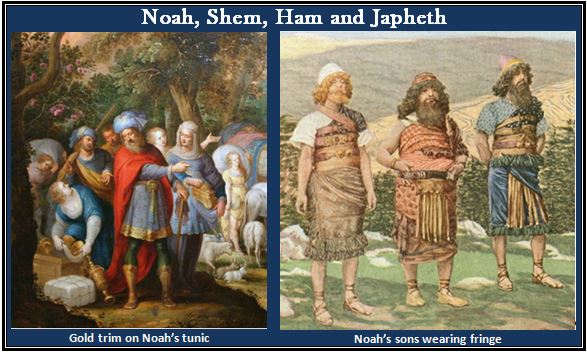
The pictures, of the children of Israel above, come from the site below which shows many pictures of our fashion history.

See Fashion History http://world4.eu/anglo-saxon/ and http://world4.eu/roman-imperial-clothing/


Adam & Eve’s Clothing


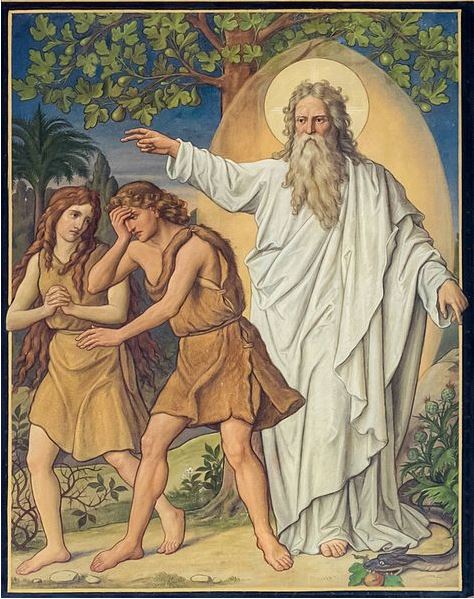
After the fall of Adam and Eve our Father in Heaven made them tunics of hide to wear. 


“And the Lord God made for Adam and his wife garments [G5509 χιτών (chitōn); a tunic, an undergarment, usually worn next to the skin, a garment, a vestment] of skin [G1193 δερμάτινος (dermatinos); made of hide], and clothed them.” Sep Gen 3:22 


“And the Lord God made for Adam and his wife, garments [tunicas] of skins, and clothed them.” DR Gen 3:21 (translated from the Latin Vulgate below & skins must have been inserted based on the Greek)


“fecit [make, contruct] quoque [each] Dominus Deus Adam et uxori [wife] eius [is, him, her] tunicas [tunic, an undergarment worn by both men and women] pellicias [I allure, entice] et induit [to put on] eos [is]” LV Gen 3:21


“Unto Adam also and to his wife did the Lord God make coats [H3801 kethoneth or kuttoneth; a tunic, a shirt -- coat, garment, robe] of skins [H5785 or: hide, leather, skin], and clothed them.” KJV Gen 3:21


Reflected below is 1700s art showing what Adam and Eve’s clothes may have looked like.


Levi’s Garments


Our Father in Heaven provided specific instructions for clothing the Levitical Priests.  He instructed that they were to also wear tunics; notice that the same words were used in the original languages for the tunics as for Adam and Eve.  So they were to use the same style made out of linen and it was to be floor length.  Plus the Levites were to wear an overcoat like a cloak or himation.  Then they were to add trim and embellishments.


“And having taken the garments [G4749 στολή (stolē); equipment, a “stole” or long fitting gown (as a mark of dignity)], thou shalt put on Aaron thy brother both the full-length robe [G5509 χιτών (chitōn); a tunic, an undergarment, usually worn next to the skin, a garment, a vestment] [G4158 ποδήρης (podērēs); a dress (G2066 implied) reaching the ankles]  and the ephod and the oracle; and thou shalt join for him the oracle to the ephod.” Sep Exo 29:5 


“Thou shalt clothe Aaron with his vestments [vestimentis], that is, with the linen [linea]  garment and the tunick [tunica], and the ephod [superumerali] and the rational, which thou shalt gird with the girdle.” DR Exo29:5


“indues Aaron vestimentis [clothes, garment, robe] suis id est linea [linen thread from flax] et tunica [tunic, an undergarment worn by both men and women] et superumerali [ephod; A priestly apron, or breastplate,] et rationali quod constringes [bind] balteo [belt, girdle]” LV Exo 29:5


“And thou shalt take the garments [H899b beged: a garment, covering], and put upon Aaron the coat [H3801 kethoneth or kuttoneth; a tunic, a shirt -- coat, garment, robe], and the robe [H4598 meil; cloak, coat, mantle, robe] of the ephod [H646 ephod; a girdle; specifically the ephod or high-priest's shoulder- piece], and the ephod, and the breastplate [H2833 choshen: breastpiece, sacred pouch], and gird him with the curious girdle of the ephod:” KJV Exo 29:5


The floor length tunic was constructed with a decorative hem that included golden bells and pomegranates. The color of the decorative hem was to be of hyacinth, purple, and scarlet (more about these colors below). The purpose of the bells sounding as Aaron goes in and out of the sanctuary is very interesting; since later bells were placed as at churches and were rang to sound that church would be beginning and people would be entering the church.


Pomegranate flowers are mentioned in the Greek Septuagint; however not in the Latin Vulgate or the Masoretic text. Therefore, what the trim actually looked like would differ based on the text you are reading. Also it is very clear in the Greek Septuagint that both the bells and pomegranates are to be golden. The flowers were to be blue, purple and scarlet.


“And under the fringe [λῶμᾰ  (lôma); hem, fringe, border of a robe; G3090.1 hem] of the robe [G5267.1 undergarment] below thou shalt make as it were pomegranates of a flowering pomegranate tree, of blue [G5192 ὑάκινθος (huakinthos); the hyacinth or jacinth, some gem of a deep blue color], and purple [G4209 πορφύρα (porphura); the “purple” mussel, that is the red blue color itself], and spun scarlet [G2847 κόκκινος (kokkinos); crimson, scarlet, dyed with Kermes (coccum), the female coccus of the Kermes oak], and fine linen [G1040 βύσσος (bussos); white linen, a fine species of flax] spun, under the fringe of the robe round about: golden [G5552 χρύσεος (chruseos); made of gold] pomegranates of the same shape, and bells [G2965.1 κώδωνας bells; κώδων (kódon) bell] round about between these. A bell by the side of a golden pomegranate, and flower-work on the fringe of the robe round about.  And the sound of Aaron shall be audible when he ministers, as he goes into the sanctuary before the Lord, and has he goes out, that he die not.” Sep Exo 28:29-31


“And beneath at the feet of the same tunick [tunicae ] round about, thou shalt make as it were pomegranates, of violet [hyacintho], and purple [purpura], and scarlet [cocco ] twice dyed, with little bells [tintinabulis ] set between: So that there shall be a golden bell and a pomegranate, and again another golden bell and a pomegranate. And Aaron shall be vested with it in the office of his ministry, that the sound may be heard, when he goeth in and cometh out of the sanctuary, in the sight of the Lord, and that he may not die.” DR Exo 28:33-35


“deorsum vero ad pedes eiusdem tunicae per circuitum quasi mala punica facies ex hyacintho [iris (plant), sapphire] et purpura [a species of shellfish or mussel, purple] et cocco [he insect, Coccus ilicis, used for producing scarlet dye, a scarlet berry] bis tincto [coloured] mixtis [mixed] in medio [half] tintinabulis [a bell]” LV Exo 28:33


“And beneath upon the hem [H7757 shul: skirt (of a robe), hem, skirt, train] of it thou shalt make pomegranates of blue [H8504 tekeleth: the cerulean mussel, i.e. The color (violet) obtained therefrom or stuff dyed therewith -- blue.], and of purple [H713 argaman: purple, red-purple], and of scarlet [H8144 shani: scarlet], round about the hem [H7757 shul: skirt (of a robe), hem, skirt, train] thereof; and bells [H6472 paamon: bell] of gold between them round about: A golden bell and a pomegranate, a golden bell and a pomegranate, upon the hem of the robe round about. And it shall be upon Aaron to minister: and his sound shall be heard when he goeth in unto the holy place before the Lord, and when he cometh out, that he die not.” KJV Exo 28:33-35


The first century historian Josephus provides this information regarding the Levitical Priests garment colors:


“The vails, too, which were composed of four things, they declared the four elements; for the fine linen was proper to signify the earth, because the flax grows out of the earth; the purple signified the sea, because that color is dyed by the blood of a sea shell fish; the blue is fit to signify the air; and the scarlet will naturally be an indication of fire. Now the vestment of the high priest being made of linen, signified the earth; the blue denoted the sky, being like lightning in its pomegranates, and in the noise of the bells resembling thunder. And for the ephod, it showed that God had made the universe of four [ELEMENTS]; and as for the gold interwoven, I suppose it related to the splendor by which all things are enlightened.” Josephus Antiquities 3.7.6 (183-4)


 Many times we find that our people of Israel carried forward bible tradition usually somewhere in our culture and Granada, Spain carried forward the symbol of the golden pomegranate and scarlet flowers. Pomegranates do vary in color; they can be yellow or scarlet.  The flowers are either scarlet or orange.

Our Christian churches carried forward the bell tradition. 


Picture sources & information:

https://commons.wikimedia.org/wiki/Category:Punica_granatum_flowers#/media/File:Punica_granatum_flower.jpg

https://commons.wikimedia.org/wiki/File:Arms_of_Granada-_Coat_of_Arms_of_Spain_Template.svg

https://commons.wikimedia.org/wiki/File:Saint_lazarus_larnaca_bell.jpg

https://en.wikipedia.org/wiki/Pomegranate

https://www.quora.com/What-is-the-reason-behind-the-national-flower-of-Spain

https://en.wikipedia.org/wiki/Coat_of_arms_of_Bogot%C3%A1#:~:text=Design%20and%20meaning&text=The%20eagle%20is%20an%20imperial,the%20New%20Kingdom%20of%20Granada.


The Children of Israel have Decorative Hems


According to both the Book of Numbers and Deuteronomy, the children of Israel were to put decorative hem on the edge of their cloak, robe or outer garment. This decorative hem was to be blue and it was to remind us to keep the commandments of our Father in Heaven.


Our outer garment is to have this decorative hem and it Strong’s G2440 ‘himation’ in the Greek Septuagint and this same word for used for Jesus’ robe or cloak that the women touched to be healed (see section below). The woman actually touched Jesus’ hem or Strong’s G2899 ‘kraspedon’ in Greek; therefore she touched the hem of his cloak or robe and these same Greek words are used in the verses below in Numbers.


“Speak to the children of Israel, and thou shalt tell them; and let them make for themselves fringes [G2899 κράσπεδον [kraspedon]; the fringe, edge] upon the borders [G4419 πτερύγιον (pterugion); a winglet, i.e. (figuratively) extremity (top corner)] of their garments [G2440 ἱμάτιον (himation); ἕννυμι hennumi (to put on); an outer garment, a cloak] throughout their generations: and ye shall put upon the fringes [G2899 κράσπεδον [kraspedon]; the fringe, edge] of the borders a lace of blue [G5191 ὑακίνθινος (huakinthinos); “hyacinthine” or “jacinthine”, that is deep blue]. And it shall be on your fringes, and ye shall look on them, and ye shall remember all the commands of the Lord, and do them: and ye shall not turn back after your imaginations, and after the sight of your eyes in the things after which ye go a whoring; that ye may remember and perform all my commands, and ye shall be holy unto your God.” Sep Num 15:38-40


“Speak to the children of Israel, and thou shalt tell them I to make to themselves fringes [fimbrias] in the corners [angulos] of their garments [palliorum], putting in them ribands [vittas] of blue [hyacinthinas]:” DR Num 15:38


“loquere filiis [children] Israhel et dices ad eos ut faciant sibi fimbrias [fringe, border, edge] per angulos [corner, angle] palliorum [cloak, coverlet] ponentes [put] in eis vittas [band, ribbon] hyacinthinas [iris, sapphire]” LV Num 15:38


“Speak unto the children of Israel, and bid them that they make them fringes [H6734 tsitsith: a tassel, lock, fringe] in the borders [H3671 kanaph: wing, extremity] of their garments{[H899b beged: a garment, covering] throughout their generations, and that they put upon the fringe of the borders a ribband [H6616 pathil: cord, thread] of blue [H8504 tekeleth: cerulean mussel, i.e. The color (violet) obtained therefrom or stuff dyed therewith -- blue]” KJV Num 15:38


Deuteronomy has the same law but does not mention the color the trim was to be in. Here it is implied that the trim is twisted or maybe braided then put on the hem of an overcoat, cloak, or robe.


“Thou shalt make fringes [G4761 twisted; στρεπτά  (streptós); Easily twisted, pliant] on the four borders [G2899 κράσπεδον [kraspedon]; the fringe, edge]] of thy garments [G4018 περιβόλαιον (peribolaion); something thrown around one, a mantle, veil, cloak, covering], with which soever thou mayest be clothed.” Sep Deu 22:12  


“Thou shalt make strings [funiculus] in the hem [fimbriis] at the four corners [angulos] of thy cloak [pallii], wherewith thou shalt be covered.” DR Deu 22:12


“Funiculus [slender rope, cord] in fimbriis [fringe, border, edge] facies [shape, figure] per quattuor angulos [corner, angle] pallii [cloak, coverlet] tui quo operieris [cover]” LV Deu 22:12


“Thou shalt make thee fringes [H1434 gedil: twisted threads, fringe, wreath] upon the four quarters of thy vesture [H3682 kesuth: a covering, covering, raiment, vesture], wherewith thou coverest thyself.” KJV Deu 22:12


Based on my reading of the above scriptures the Israelites were to wear a decorative hem with twisted ribbon, lace or fringe on their outer garment. The color was to be hyacinthine which the translators say is the color blue. So I looked for oil painting to see what artists thought the Patriarchs and Israelites of the bible wore.  I found many oil paintings without trim on their clothes and many with trim.  I did not find any proof they wore tassels unless it was several of them on their hem and looked more like fringe; there is no artwork showing the Israelites wearing four tassels on their garment.


Picture sources:

Esther https://en.wikipedia.org/wiki/Esther#/media/File:Ester_y_Mardoqueo_escribiendo_la_primera_carta_del_Purim_(Ester,_9-20-21)_-_Aert_de_GELDER_-_Google_Cultural_Institute.jpg

Jeremiah https://en.wikipedia.org/wiki/Jeremiah#/media/File:Rembrandt_Harmensz._van_Rijn_-_Jeremia_treurend_over_de_verwoesting_van_Jeruzalem_-_Google_Art_Project.jpg

King David https://commons.wikimedia.org/wiki/File:Monheim_Town_Hall_1.JPG

Ark of the Covenant https://commons.wikimedia.org/wiki/File:%C3%9Cberf%C3%BChrung_der_Bundeslade_(Umbrien_16_Jh).jpg


Garment Decorative Hem Colors


The table below indicates the colors mentioned in the verses above and the information found regarding these colors.    I indicate my interpretation of the color in the last column.  All bible translators appear to believe that hyacinth is deep blue; however determining what they actually used to make that color is not easy.  Our Father in Heaven did not actually indicate the colors to be used; HE told them the source they were to use as dye.


According to the Greek and Latin hyacinth was to be used for the Israelite’s decorative hems and there is a flower today called Hyacinth; however this flower was not named hyacinth until 1753. The Greek Strong’s states that the jacinth stone may have been used; however the bible translators must not have believed that since the stone color is amber and not blue. The Latin definition indicates an iris flower or a sapphire stone which both of these could be of any color. Josephus tells us that the deep blue was to signify the sky and we do use Azure in our heraldry that is sky colored.  The lapis lazuli stone was available to the ancient and many artifacts have been found that were made of the lapis lazuli stone.  Mary, mother Jesus, is traditionally shown wearing an azure blue robe or cloak using lapis lazuli stone to make the dye.


Sources:

Azure the color of the sky on a clear day, dye from lapis lazuli stone https://en.wikipedia.org/wiki/Azure_(color)

“The flower hyacinth that rose from Hyacinth's blood is said to have had a deep blue hue and an inscription resembling "AI" on its petals, a symbol of sorrow. However, this flower has been identified with another plant, the larkspur, or an iris, rather than what we today call hyacinth.” https://en.wikipedia.org/wiki/Hyacinth_(mythology)#Attributes

Blue https://en.wikipedia.org/wiki/Lapis_lazuli

Lapis ring https://en.wikipedia.org/wiki/Lapis_lazuli#/media/File:Scarab_Finger_Ring_MET_26.7.755_top.jpg

Azure in Heraldry https://en.wikipedia.org/wiki/Azure_(heraldry)

Mary wearing a Blue Azure cloak from lapis lazuli stone https://commons.wikimedia.org/wiki/File:Angelico,_madonna_col_bambino,_pinacoteca_sabauda.jpg

Mary has blue robe in art https://en.wikipedia.org/wiki/Mary,_mother_of_Jesus#Depiction_in_Renaissance_art

“Tyrian purple (Ancient Greek: πορφύρα porphúra; Latin: purpura), also known as Phoenician red, Phoenician purple, royal purple, imperial purple, or imperial dye, is a reddish-purple natural dye. The Phoenicians also made a deep blue-colored dye, sometimes referred to as royal blue or hyacinth purple, which was made from a closely related species of marine snail.” https://en.wikipedia.org/wiki/Tyrian_purple

Purple https://en.wikipedia.org/wiki/Tyrian_purple#/media/File:Empress_Theodora.jpg

Sea Mussel https://en.wiktionary.org/wiki/murex#Latin

Crimson/Scarlet https://en.wikipedia.org/wiki/Kermes_(dye)#/media/File:Weltliche_Schatzkammer_Wienc.jpg

“Kermes is a genus of scale insects in the order Hemiptera. They feed on the sap of evergreen oaks; the females produce a red dye, also called "kermes", that is the source of natural crimson.” https://en.wikipedia.org/wiki/Kermes_(insect)


Blue the Symbol of Purity


As Josephus stated the blue signified the sky; therefore it signified the heavens.  It is tradition that blue signified purity and to be pure we must follow the commandments of our Father in Heaven.


Column 1 https://chroniclingamerica.loc.gov/lccn/sn83045462/1949-05-25/ed-1/seq-34.pdf


Jesus’ Hem


Below is the verse that indicates the woman was healed from touching the hem of Jesus’ outer garment (cloak, himation or robe).  This verse does not indicate whether the hem of Jesus’s robe was trimmed or not.  It does indicate that the outer garment had healing powers though; it is possible that it was made from linen or wool which has healing powers.  Plus it is also possible that Jesus just granted her this miracle because she believed. 


“And behold a woman who was troubled with an issue of blood twelve years, came behind him, and touched the hem [fimbriam] of his garment [vestimenti] For she said within herself: If I shall touch only his garment [vestimentum], I shall be healed.” DR Mat 9:20-21


“et ecce mulier quae sanguinis fluxum patiebatur duodecim annis accessit retro et tetigit fimbriam [fringe, border, edge] vestimenti [clothes, garment, robe] eius dicebat enim intra se si tetigero tantum vestimentum [clothes, garment, robe] eius salva ero” LV 9:20-21


“And, behold, a woman, which was diseased with an issue of blood twelve years, came behind him, and touched the hem [G2899 κρασπέδου (kraspedon); the fringe, edge, corner, tassel, the embroidered border of a garment] of his garment [G2440 ἱματίου (himation); a cloak; the outer garment, robe]: For she said within herself, If I may but touch his garment [G2440 himation], I shall be whole.” KJV Mat 9:20-21


Most all oil paintings show Jesus wearing a blue himation and his inner garment or tunic is scarlet.  Two of the pictures below show Jesus wearing a scarlet himation.  I was able to find a few old pictures of Jesus wearing a decorative trim and they are shown below.  I did not see one old picture of Jesus wearing tassels.


Picture source:

c. 900 Jesus wearing Celtic cross (earth symbol) on this head (king of the earth) https://commons.wikimedia.org/wiki/File:Matthew8CodexEgbertiFol22rDetail.jpg

c. 1300 Jesus https://commons.wikimedia.org/wiki/File:Florentinischer_Meister_um_1300_001.jpg

c. 1600 Christ giving blessing https://commons.wikimedia.org/wiki/File:Circle_of_Joos_van_Cleve_Christ_Giving_the_Blessing.jpg


Garment Material


The law states that we can wear wool and linen; however they must never be mixed together to produce a garment.


“Thou shalt not wear a mingled garment, woolen [G2053 ἔριον (erion); wool] and linen [G3043 λίνον (linon); linen clothing made from flax] together.” Sep Deu 22:11 


“Thou shalt not wear a garment that is woven of woollen and linen together.” DR Deu 22:11


“non indueris vestimento quod ex lana [wool] linoque [and linen] contextum [weaving] est” LV Deu 22:11


“Thou shalt not wear a garment of divers sorts, as of woollen [H6785 tsemer: wool] and linen [G6593 pesheth: flax, linen] together.” KJV Deu 22:11


It is actually a health risk to wear a garment of linen and wool mixed together as shown in the picture below.  Both linen and wool worn separately will maintain your health and heal your body.


From http://www.new2torah.com/2011/11/the-power-of-linen/


These sites provide more information about the materials we wear today:

https://fashionbi.com/newspaper/the-health-risks-of-toxic-fibers-and-fabrics

https://www.treehugger.com/style/50-surprising-fashion-and-beauty-products-made-from-oil-that-you-probably-use-everyday-even-if-youre-green.html


Woman are to be Modest


The verse below in Timothy tells us women that we should always be modest; wearing descent apparel that does not show off our bodies.  Today many women wear tight pants that show off every curve and ripple of their body and this would be considered not decent appeal.  Plus showing off our cleavage would not be decent apparel.  We should have a sense of shame if our private body parts are exposed or accented in any way. 


“In like manner also, that women adorn themselves in modest [G127 aidós); a sense of shame, bashfulness, i.e. (towards men), modesty or (towards God) awe -- reverence, shamefacedness] apparel, with shamefacedness and sobriety; not with broided hair, or gold, or pearls, or costly array; But (which becometh women professing godliness) with good works.” KJV 1 Tim 2:9-10


“In like manner women also in decent apparel: adorning themselves with modesty and sobriety, not with plaited hair, or gold, or pearls, or costly attire” DR 1 Tim 2:9


“similiter et mulieres in habitu ornato cum verecundia [feeling shame, shamefaced, bashful, shy, modest] et sobrietate ornantes se non in tortis crinibus aut auro aut margaritis vel veste pretiosa” LV 1 Tim 2:9


Himation


A himation is a rectangular cloak of linen or wool, worn in Ancient Greece, usually over a chiton (tunic).  The Greek Septuagint used the words Himation and Chiton in the original writings (verses above).


Picture Sources:

https://commons.wikimedia.org/wiki/File:Triptolemus_Yale_Louvre_G368.jpg

https://commons.wikimedia.org/wiki/File:0585_-_Archaeological_Museum,_Athens_-_Parva_Herculanensis_-_Photo_by_Giovanni_Dall%27Orto,_Nov_10_2009_(1).jpg


Cloak


In ancient times a cloak was worn by both men and women.  It is the shape of a bell when worn.  The word cloak and the word clock are both of Proto-Celtic origin from the word ‘klokkos’ meaning bell.  Reflected below is the Etymology of both words:


Cloak “From Middle English cloke, from Old Northern French cloque (“travelling cloak”), from Medieval Latin clocca (“travelers' cape, literally “a bell”, so called from the garment’s bell-like shape”), of Celtic origin, from Proto-Celtic *klokkos-, ultimately imitative.” From https://en.wiktionary.org/wiki/cloak#English


Clock “c. 1350–1400, Middle English clokke, clok, cloke, from Middle Dutch clocke (“bell, clock”), from Old Northern French cloque (“bell”), from Medieval Latin clocca, probably of Celtic origin, from Proto-Celtic *klokkos (“bell”) (compare Welsh cloch, Old Irish cloc), either onomatopoeic or from Proto-Indo-European *klek- (“to laugh, cackle”)” From https://en.wiktionary.org/wiki/clock#English


The pictures below reflect the royal line wearing cloaks of various shades of the azure color of blue.


Picture sources:

https://commons.wikimedia.org/wiki/Category:Marriage_in_medieval_miniature#/media/File:Marriage_of_Bohemond_I_and_Constance_-_Chronique_d'Ernoul_et_de_Bernard_le_Tr%C3%A9sorier_(late_15th_C),_f.170_-_BL_Royal_MS_15_E_I.jpg

https://commons.wikimedia.org/wiki/File:Portrait_of_Charles_IX.jpg

https://commons.wikimedia.org/wiki/File:Mollien.jpg


The link below explains how to make a cloak and shows old pictures of cloaks:

http://www.cardinal-creations.com/projects/laurel-cloak


Keep watch with your Himation on


Blessed are those who are ready for Jesus’ return and keeps there himation or cloak on. 


“Behold, I am coming like a thief! Blessed is the one who stays awake, keeping his garments [G2440  ἱμάτια (himation); an outer garment, a cloak, robe] on, that he may not go about naked [G1131 γυμνὸς (gumnos); naked, poorly clothed] and be seen exposed [G808 (aschémosuné); unseemly behavior, unseemliness, indecency, shame, nakedness, an indecent (lewd) act]!” ESV Rev 16:15


“Behold, I come as a thief. Blessed is he that watcheth, and keepeth his garments, lest he walk naked, and they see his shame.” DR Rev 16:15


“ecce venio sicut fur beatus qui vigilat et custodit vestimenta [clothes, garment, robe]  sua ne nudus [unclothed, nude, naked] ambulet et videant turpitudinem [indecency shamefulness, disgrace, dishonor] eius” LV Rev 16:15


Conclusion


Today’s styles at the store do not always have a decorative hem and in fact it is sometimes hard to find.  It is pretty easy though to find trim with some blue in it to sew on to your garments though.  I have added trim to several of my dresses so they are trimmed for church and feast days.  I would love to have more blouses with decorative trim.  I would also like to make myself a cloak of wool with trim.  I do believe it would help in remembering to always follow the commandments of our Father in Heaven.  So do trim your clothes and be modest!