Showing posts with label Franciscan. Show all posts

Sunday, May 27, 2018

Constantine Moves the Capital of Rome


Constantine’s rule of the Roman Empire began in 306AD.  His reign was during the time that Christians did not own bibles since the printing press had not yet been invented; therefore common people did not have copies of all the biblical scrolls.  Many Israelites had been scattered all over the earth and lots into Europe at this time due to their mis-behavior. Constantine implemented many changes, as follows:

·         It was during his reign that Constantine instituted Easter and forbid the Last Supper to be observed the day before Passover.  
·         He built the Church of the Holy Sepulchre in the Middle East over the top of temple to Venus and stated that this was the place where Jesus was buried.  This Church in the Middle East is currently under Franciscans control.  The Franciscans also control the Spanish Missions in North America. 
·         He built a new imperial residence at Byzantium and renamed the city Constantinople after himself (the laudatory epithet of "New Rome" came later, and was never an official title). It would later become the capital of the Empire for over one thousand years; for which reason the later Eastern Empire would come to be known as the Byzantine Empire.
·         He organized the First Council of Nicaea; Its main accomplishments were settlement of the Christological issue of the divine nature of the God the Son and his relationship to God the Father, the construction of the first part of the Nicene Creed, establishing uniform observance of the date of Easter, and promulgation of early canon law.  Therefore, this council implemented the trinity doctrine instead of Jesus being our Heavenly Father in the flesh.


https://en.wikipedia.org/wiki/Constantinople 

Constantine Starts Moving Places and Things

1837 news - Constantine moved obelisks from Heliopolis (Beth –Shemesh) to Byzantium

Beth Shemesh means House of the Sun Temple and it was later renamed in Greek Heliopolis. 


Judah’s territory mentions Beth-Shemesh, also called the city of Sun, as a border city.  It was on the border of Egypt:

And the border will go round from Baal to the sea, and will go on to the mount of Assar behind the city of Jarin northwards; this is Chaslon: and it will come down to the city of Sun, and will go on to the south.”  Sep Jos 15:10 

and the border turned about from Baalah westward to Mount Seir, and passed along to the side of Mount Jearim on the north (the same is Chesalon), and went down to Beth-shemesh, and passed along by Timnah;” WEB Jos 15:10

There was a Heliopolis aka Beth-Shemesh aka house of the sun in Egypt:

He shall also break the pillars of Beth-shemesh, that is in the land of Egypt; and the houses of the gods of Egypt shall he burn with fire.” WEB Jer 43:13  http://biblehub.com/lexicon/jeremiah/43-13.htm

And he shall break the statues of the house of the sun, that are in the land of Egypt; and the temples of the gods of Egypt he shall burn with fire.”​ DR Jer 43:13

et conteret [grind or crush] statuas [statues] domus [house] Solis [sun] quae sunt in terra[ground, dry land] Aegypti [Egypt] et delubra deorum Aegypti conburet igni” LV Jer 43:13

And he shall break to pieces the pillars of Heliopolis that are in On, and shall burn their houses with fire.” Sep Jer_50:13 


1848 news – Heliopolis Obelisk Moved

It appears the Caesar moved things also. The needle was in Heliopolis aka Beth-Shemesh. See column 1, towards bottom. http://chroniclingamerica.loc.gov/lccn/sn89060060/1848-07-20/ed-1/seq-1.pdf

1853 news - Constantine moved Rome to Byzantium (a Greek city)


 1901 news - Constantine removed Holy Items to Basilica

This is one tradition of what happened to the holy items.


1906 news - Emperor Constantine removed his capital and all war treasurers were given to popes


1908 news - Constantine removed seat of empire from Rome to Bizantium


Ancient Ship Wreck

Artifacts found from a ship wreck in the Mediterranean Sea.  Based on the article it appears that these items were being moved during the time of Constantine also.


Here is another shipwreck off the coast of Brazil with Roman artifacts dated c 1st century BC.


The Obelisk were Later Relocated

Some of the Obelisks that moved were later relocated:


New York Obelisk

Below is the engraving on the obelisk located in Central Park. This obelisk was originally in Heliopolis at the Temple of On which was the birthplace of Joseph's children Manasseh and Ephraim. They would have been born there circa 1900 BC.  The obelisk was created between 1504 BC and 1425 BC.  Israel was in captivity in Egypt between 1895 BC to 1465 BC; therefore the obelisk was around the time the tribes of Israel were in bondage in Egypt. This obelisk was also called the 'Obelisk of Manasseh' and I am not sure why. 


Phrygian Cap

The ancient Freeman or Phrygian cap is also known as the Liberty cap and it is the Roman symbol of freedom and liberty.  It is shown in the heraldry below.  https://en.wikipedia.org/wiki/Phrygian_cap  I could not find the Phrygian cap being used anywhere overseas.  All the countries below were Caucasian countries, at one time, you can tell by the heraldry in coat of arms.  Santa means holy saint in Latin and he wore one.  Regarding the vase below, there is a place called Grecia in Costa Rica and one in Columbia also.  This Freeman cap is part of the Americas history.


Roman Artifacts in the Americas

Lots of Roman coins and other artifacts have been found in America:

The pyramids in Mexico have ball courts

The Romans and Greeks played ball games

The city of Rome has the most obelisks in the world

Franciscan Control of the Holy Places


Francis_of_Assisi  founded the Franciscan Order in 1209.   In 1342 the Franciscan order was placed in charge of Holy Places.  After reading all of their accomplishments, it appears that the Franciscan Order has not done much work over in the Middle East area.  Most of their efforts were focused on the mission systems in North America.  Their focus appears to be finding treasures for Spain and enslaving the Native American Indians.  Their goal was to remove relics from America and move them to Spain.

From Wikipedia:

The Custody of the Holy Land (Latin: Custodia Terræ Sanctæ) is a custodian priory of the Franciscan order in Jerusalem, founded as Province of the Holy Land in 1217 by Saint Francis of Assisi, who also founded the Franciscan Order. Its mission is to guard "the grace of the Holy Places" of the Holy Land and the rest of the Middle East

From 1309 settling in Bethlehem and the Holy Sepulchre along with the Canons Regular, in 1342 they were officially declared custodians of the Holy Places in the name of the Catholic Church by the Papal bulls Gratiam agimus and Nuper charissimae by Pope Clement VI.”

Church of the Holy Sepulchre (1885). Other than some restoration work, its appearance has essentially not changed since 1854. The Immovable Ladder, the small ladder below the top-right window, is also visible in recent photographs; this has remained in the same position since 1854 over a disagreement to move it.”


Spanish Mission Overview

The Mission settlements in North America started about 1533 in Mexico and ended about 1834.  After that the missions were abandoned.  The 1833 Secularization of the Missions of California act passed by Mexico freed the Indian that were working for the missions.  In 1865 President Lincoln signed the Missions over to the Roman Catholic Church.

The Spanish missions were started by the Jesuits and financed by Spain; however the Spanish government removed them from service since they had not accumulated any treasurers for them.  Then the Franciscan Orders was put in charge of the mission system.

Based on reading various old news articles (below):

·         The Jesuits and the Franciscans were enemies.
·         The Franciscans did work for the Catholic Church of Spain and got their orders from the Pope.
·         Early United States liked the Jesuits and Free Masons that resided in the United States.
·         Early United States and Free Masons did not like the Roman Catholic Church.


News Paper Articles about the Missions & Columbus

1790 Jesuits Revolutionary War News

The Jesuits were the black robe regiment that was behind the Revolutionary war.  Their moto was “Resistance to Tyrants, is obedience to God”.  Based on reading a few news articles the people of America liked the Jesuits in America.  (Note:  back then ‘s’ was an ‘f’.)


1790 Jesuits missionary efforts


1837 Columbus came to Pillage, Plunder & Enslave the Natives


1838 California Mission History & the Jesuits

California was not part of the United States yet.  The Jesuits had control of the first 11 missions in Baja California; however Spain took their control away since they did not accumulate treasures.  Control was given to the Franciscans.


1852 Franciscan burns bible


1850 Mission History


1852 Franciscan Attempt to Kill Queen of Spain


1852 Control of Holy Land – Greek, Latin, Armenians, & Franciscans


1853 Franciscans had control of the Holy Land

Some things under Franciscan control and some things under Latin control.


1856 US Bill regarding Catholic Monastery of Franciscan Brothers


1856 Franciscan collects money for Palestine

He was getting Alms from Spain for the Holy Places in Palestine.


1859 Corporate Tax and Suppression of the Monastic Orders


1866 Easter, Aprils Fools and Franciscan Monk of Catholic Church


1870 News about Various Franciscan Orders and other Orders


It talks of a lot of different orders, see this…


1899 Ancient San Antonio & the Alamo


1903 Franciscan Mission of the Alamo


1903 Columbus Discovered America for Spain and Treasures


1917 Church Politics before WW1

Lots of news here….Full page article.


1492 Columbus sails the ocean blue

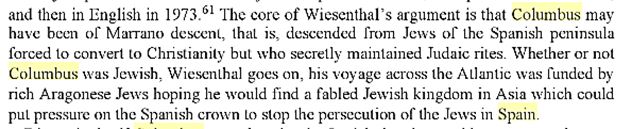
Prior to the Missions being built here, Columbus actually set sail to raid the temples in Mexico.  Was the fabled kingdom Jerusalem and the other holy places?  


In the book below Columbus referred to America as India since that is where the indigenous people lived. 


Many say Columbus was trying to get to the Orient in current day Asia; however, he could have taken a horse there.  


Orient in Mexico

Columbus was sailing to get to the Orient in Mexico and today there is a mountain range called Sierra Madre Oriental.  The word ‘orient’ means east in Latin.  https://en.wikipedia.org/wiki/Sierra_Madre_Oriental


1589 Map with Red Circles around Temples/Pyramids

These are the temples that Columbus was looking to find.  Columbus did know where he was going.
https://www.loc.gov/maps/?sb=date&dates=1100-1199


My Visits to California Missions

I have been to several of the California missions.  I checked a couple with a compass and they appear to be oriented correctly – meaning the people in the church audience are seated facing east. The sidewalks in their fountain court years appear to be orientated to the sun also for telling time. These missions have quite a few artifacts of value and a lot of Catholic items.  The Missions were built by the local native Indians.
About facing east:


San Juan Capistrano Mission
This mission appears to be older than what they say it is; however I do not know.  They state an earthquake damaged this part of the mission in 1812.  It I made with uncut stone and plaster (biblical).

The flag displayed at the mission Levi’s and Judah’s symbols.


San Gabriel Mission
The mission was named after the Archangel Gabriel that visited the Virgin Mary. 
The Tongva Indians lived in the area who were called the Gabrieleño. https://en.wikipedia.org/wiki/Tongva


See this page for more information on the cross and cross quarter days.   

San Diego Mission
These choir chairs look very old.


Mission Santa Ines
This mission has some really nice oil paintings.  They appear to be very old.


Mission Time Line

1533 Spanish Missions in Mexico
1565 Florida Missions
1568 Georgia Missions
1598 New Mexico Missions
1609-1625 French & Spanish Jesuit Missions
1629 Arizona Missions
1634 to 1834 in Baja California
1645 Sonora Desert Missions
1680 Corpus Christi Mission
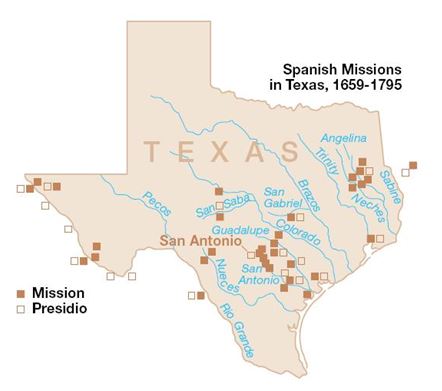
1689 Texas Missions
1721 Mission Los Adaes in Louisiana (Original Texas capitol)
1744 Alamo in San Antonio Texas
1769 to 1833 in Alta (upper) California

Mission Maps


El Camino Real or Old Spanish Trail

El Camino Real means Royal Road or King’s Highway.  They connect the East coast to the West Coast missions and down into Mexico.  The Spanish Missions were on these ancient highways.

The Franciscans built missions along the El Camino Real; The Almo in Texas, the California Missions and others.  


El Camino Real into Mexico

El Camino Real from Santa Fe, New Mexico to Mexico http://www.thehistoryhub.com/camino-real-de-tierra-adentro-facts-pictures.htm (below)   
These places are all in a line leading into Mexico:
·         Blood of Christ Mountains in  Colorado https://en.wikipedia.org/wiki/Sangre_de_Cristo_Mountains
·         Las Cruces which means the Crosses

I am just pointing this out and do not know if this is of any importance.


Misc Links..

Florida, Georgia, Louisiana, Texas, New Mexico, Arizona, California

Spanish in Utah


Also see - California Places Named after Ancient Saints

Saturday, April 28, 2018

1847 news - Aboriginal History of Southwest American


1847 news of Aboriginal History of American & Col. Doniphan’s Remarkable Expedition states the following summary of facts:

Navajo Tribe:  were war-like and had no towns.

Sumais Tribe:  lived in a well-planned city and were the agriculture type.  They had two story homes made of sun burnt bricks.  They lived on the Rio Piscow that connects to the Goyla River. In this city were 30 albino Indians that give raise to the stories of the white aborigines living in the Rocky Mountains.

Nation of Anahuac was the Nahuatlacks who settled in Anahuse: they were from Azlan (Aslan means lion), they had seven tribes called:  Sochimillcas, Chalchese, Tapanecas, Colhuas, Tlahuicas, Tlascalans, Mexicans or Aztecs.

Moqui Tribe:  lived in an area watered by the Rio Yaquesila, had a well-planned city.  Building constructed like the Casa Grande on the banks of the Gila River.  The language of the Moqui, the Yabipais, who have long beards (white people have beards, Asians do not) & those who inhabit the vicinity of the Rio Colorado is different than the Mexican language.

Villages called Uturicet & Sutaquisan Tribes: these Indians were clothed and tilled the soil peacefully.  They grew maize (corn), cotton and gourds.

Kingdom of Cibola:  In 1539 a Franciscan monk reported there was one native white man of the town of Cibola.  He said some Indians on the coast reported more white men up the country.  The Cibola people had an abundance of gold, maize and excellent salt. 

See below and in column 1: here


The Casa Grande reported on was actually in Coolidge, Arizona.  At the time of this news article, Arizona had not become a state yet.  The Ancient Pueblo Peoples (Anasazi) from the Hohokam tribe are now credited for building the Casa Grande.  The Hohokam tribe was very sophisticated tribe with water canals and so forth. 

 1880 Picture of Casa Grande