"And Joseph said to his father, Not so, father; for this is the first-born; lay thy right-hand upon his head. And he would not, but said, I know it, son, I know it; he also shall be a people, and he shall be exalted, but his younger brother shall be greater than he, and his seed shall become a multitude of nations. Gen 48:18-19
In 1882, a coin of Antiochus IV Epiphanes, who was king of
the Seleucid Empire, was found in Cass County, Illinois.This king was mentioned in 1 Maccabees.The coin found probably looked like the one
below; however, I cannot be sure.
“At
the same time that Antiochus, who was
called Epiphanes, had a quarrel with the sixth Ptolemy about his right to
the whole country of Syria, a great sedition fell among the men of power in
Judea, and they had a contention about obtaining the government; while each of
those that were of dignity could not endure to be subject to their equals.
However, Onias, one of the high priests, got the better, and cast the sons of
Tobias out of the city; (32) who fled to Antiochus, and besought him to make
use of them for his leaders, and to make an expedition into Judea.” ‘ The Writings of Flavius Josephus’ War
1.1.1:31
Many Christians today believe that they must help our Father
in Heaven fulfill prophecy and bring people to the knowledge of Jesus
Christ.The problem with this theology
is that it is not based on scripture.Jesus Christ did tell the apostles to go out and tell the Israelites
that he did come and there were a few minor changes in the law; however, there
is no command for us now to act as missionaries and go out to save others.Scripture states that Jesus Christ is the
Good Shepherd of the Sheep and as the shepherd he will lead them to the path of
righteousness. Scripture also states
that Jesus Christ ‘calls us’ to the knowledge of the truth.Therefore, we do not choose him and instead
he chooses who he desires to know the truth and will help lead them to
salvation.
The oldest two professions in the bible are sheep herding
and a farmer who is a tiller of the ground. Abel was a keeper of the sheep
which is now called a shepherd.The
English word shepherd is a compound word ‘sheep’ plus ‘herd’.A shepherd or sheepherder is a person who takes
care of sheep, herds, feeds, and guards’ herds of sheep.
“And
she again bore his brother Abel. And Abel was a keeper of sheep, but Cain was a
tiller of the ground. And it was so after some time that Cain brought of the
fruits of the earth a sacrifice to the Lord.” Sep Gen 4:2-3
Seth was the blessed seedline and a replacement for Abel;
however scripture does not mention that Seth was a sheepherder but he probably
was.The next sheepherder in the blessed
seedline of Jesus Christ is Abraham.
“And
they treated Abram well on her account, and he had sheep, and calves, and asses,
and men-servants, and women-servants, and mules, and camels.”Sep Gen 12:16
The verses below show all the promises that Jesus has or will
fulfill as the Good Shepherd. Notice in
each verse it states the promises HE will do.
“A
Psalm of David. The Lord tends me as a shepherd, and I shall want
nothing. In a place of green grass, there he has made me dwell: he
has nourished me by the water of rest. He has restored my soul: he has guided me into the paths
of righteousness, for his name's sake. Yea, even if I should walk in the midst
of the shadow of death, I will not be afraid of evils: for thou art with me;
thy rod and thy staff, these have comforted me. Thou has prepared a table
before me in presence of them that afflict me: thou hast thoroughly anointed my
head with oil; and thy cup cheers me like the best wine. Thy mercy also shall
follow me all the days of my life: and my dwelling shall be in the house of the
Lord for a very long time.” Sep Psa 23:1-6
“For thus saith the Lord God, Behold, I will seek out my sheep, and will visit them. As the shepherd seeks his flock, in the day
when there is darkness and cloud, in the midst of the sheep that are separated:
so will I
seek out my sheep, and will
bring them back from every place where they were scattered in the day of
cloud and darkness. And I will bring
them out from the Gentiles, and will gather them from the countries, and will bring them into their own land,
and will feed them upon the mountains of Israel, and in the valleys, and in
every inhabited place of the land. I will feed them in a good pasture, on a high
mountain of Israel: and their folds shall be there, and they shall lie down,
and there shall they rest in perfect prosperity, and they shall feed in a fat
pasture on the mountains of Israel. I will feed my sheep, and I will cause them to rest; and
they shall know that I am the Lord: thus saith the Lord God. I will seek
that which is lost, and I will recover
the stray one, and will bind up that which was broken, and will strengthen the
fainting, and will guard the strong, and will feed them with judgment. And
as for you, ye sheep, thus saith the Lord God, Behold, I will distinguish between sheep and sheep,
between rams and he-goats.
And is it not enough for you that ye fed on the good pasture, that ye
trampled with your feet the remnant of your pasture? and that ye drank the
standing water, that ye disturbed the residue with your feet? So my sheep fed on that which ye had trampled
with your feet; and they drank the water that had been disturbed by your feet.
Therefore thus saith the Lord God; Behold, I will separate between the strong sheep and the
weak sheep. Ye did thrust with your sides and shoulders,
and pushed with your horns, and ye cruelly treated all the sick. Therefore I will save my sheep, and they shall
not be any more for a prey; and will judge between ram and ram. And I willraise up one shepherd over them, and he shall
tend them, even my servant David, and he shall be their shepherd; and I the Lord will
be to them a God, and David a prince in the midst of them; I the
Lord have spoken it.” Sep Eze 34:11-24
“And
my servant David shall be a prince in the midst of them: there shall be one shepherd of them all;
for they shall walk in mine ordinances, and keep my judgments, and do them.”
Sep Eze 37:24
“Behold
the Lord! The Lord is coming with strength, and his arm is with power: behold,
his reward is with him, and his work before him.He shall tend
his flock as a shepherd,
and he shallgather
the lambs with his arm, and shall soothe them that are with young.” Sep Isa
40:10-11
“When
Herod the king heard this, he was troubled, and all Jerusalem with him; and
assembling all the chief priests and scribes of the people, he inquired of them
where the Christ was to be born. They told him, “In Bethlehem of Judea, for so
it is written by the prophet: “‘And you, O Bethlehem, in the land of Judah, are
by no means least among the rulers of Judah; for from you shall come a ruler who
will shepherd my people Israel.’”” ESV Mat 2:3-6
“I am the good
shepherd. The good shepherd lays down his life for the sheep. He who
is a hired hand and not a shepherd, who does not own the sheep, sees the wolf
coming and leaves the sheep and flees, and the wolf snatches them and scatters
them. He flees because he is a hired hand and cares nothing for the sheep. I am the good
shepherd. I know my own and my own know me, just as the Father knows
me and I know the Father; and I lay down my life for the sheep.” ESV John 10:11-15
“My sheep hear my voice, and I know them, and they follow
me.”ESV John 10:27
“Now
may the God of peace who brought again from the dead our Lord Jesus, the great
shepherd of the sheep, by the blood of the eternal covenant, equip youwith everything good that you may do his will,
working in us that which is pleasing in his sight, through Jesus Christ, to
whom be glory forever and ever. Amen.” ESV Heb 13:20-21
“And
when the chief
Shepherdappears, you will
receive the unfading crown of glory.” 1 Pet 5:4
“For
the Lamb in the midst of the throne will be their shepherd, and he will guide
themto springs of living water,
and God will wipe away every tear from their eyes.” ESV Rev 7:17
Jesus Christ the Shepherd of the Lost Sheep of Israel
Scripture tells us that Jesus is the Shepherd of the lost
sheep of the tribes of Jacob Israel.
Jeremiah explains that Jesus’ sheep were lost during his life time. These sheep forgot who they were and they
forgot where they came from. Jeremiah
states that it was false pastors also called shepherds that led the Israelites
astray. They were never really lost though since Jesus and the apostles knew
where they were located.
Since the book of Jeremiah is ordered differently in the
Greek Septuagint than the Masoretic text I provided both versions of the same
verse.
“My people have
been lost sheep: their shepherds thrust them out, they caused them
to wander on the mountains: they went from mountain to hill, they forgot their
resting-place.” Sep Jer 27:6
“My
people have been lost sheep. Their shepherds have led them astray,
turning them away on the mountains. From mountain to hill they have gone. They
have forgotten their fold.” ESV Jer 50:6
Notice that when the apostles
were called to go witness about Jesus Christ they were to do it without
payment. Today’s missionaries and
pastors ask for money to fund their services.
“These twelve Jesus sent out, instructing them, “Go nowhere among the
Gentiles and enter no town of the Samaritans, but go rather to the lost sheep of the house of
Israel. And proclaim as you go, saying, The kingdom of heaven is at
hand.’ Heal the sick, raise the dead, cleanse lepers, cast out demons. You
received without paying; give without pay.” ESV Mat 10:5-8
“He
[Jesus] answered, “I was sent only to the lost sheep of the house of Israel.” ESV
Mat 15:24
“So
he told them this parable: “What man of you, having a hundred sheep, if he has
lost one of them, does not leave the ninety-nine in the open country, and go
after the one that is lost, until he finds it? And when he has found it, he
lays it on his shoulders, rejoicing. And when he comes home, he calls together
his friends and his neighbors, saying to them, ‘Rejoice with me, for I have found my
sheep that was lost.’ Just so, I tell you, there will be more joy in
heaven over one
sinner who repents than over ninety-nine righteous persons who need
no repentance.” ESV Luke 15:3-7
The Calling of the Lost Sheep of the House of Israel
Our Father in Heaven promised that Isaac’s seed would be
called which means that Isaac’s descendants would be summoned or invited. Isaac’s seed was ‘called’ to receive the blessing
of being the holy seedline of Jesus Christ. Isaac’s seedline is being called
right now regarding the true path of righteousness and will be summoned when
Jesus returns.
“But
God said to Abraam, Let it not be hard before thee concerning the child, and
concerning the bondwoman; in all things whatsoever Sarrha shall say to thee,
hear her voice, for in Isaac shall thy seed be called [G2564 kaleō; I call, summon, invite].”Sep Gen 21:12
The tribes of Israel were instructed to observe the feast
days according to the laws of Moses. The Brenton Greek Septuagint translates
the Greek word ‘kaleō’ to the English word ‘convocation’ in verses regarding
the feast days of Israel. Convocation
means ‘the act of
calling or assembling by summons’.
The feast dates are days where the Israelites are summoned together by
invitation of our Father in Heaven.
“Seven
days ye shall eat unleavened bread, and from the first day ye shall utterly remove
leaven from your houses: whoever shall eat leaven, that soul shall be utterly
destroyed from Israel, from the first day until the seventh day. And the first day shall be called holy, and
the seventh day shall be a holy [G39
hagion; separated to God] convocation[G2564 kaleō; I call, summon, invite] to you: ye shall do no servile work on
them, only as many things as will necessarily be done by every soul, this only
shall be done by you. And ye shall keep
this commandment, for on this day will I bring out your force out of the land
of Egypt; and ye shall make this day a perpetual
ordinance for you throughout your generations.”Sep Exo 12:15-17
All of the feast days, that the Israelites are invited to
observe in the laws of Moses, were given calendar dates to hold these holy
assemblies. The English word ‘calendar’
is derived from the Latin word ‘calare’ which was
derived from the Latin word ‘calo’. The Latin word ‘calo’ is derived from the
Greek word ‘kaléō’ (G2564
above) meaning ‘I
call, summon, invite’. Therefore,
the calendar is a tool to track the dates of holy assemblies that Israelites
are summoned to attend.
The verses below all reflect that Jesus Christ calls us to
him:
“Since
I called[G2564 kaleō; I call, summon, invite], and ye did not hearken; and I
spoke at length, and ye gave no heed; but ye set at nought my counsels, and
disregarded my reproofs; therefore I also will laugh at your destruction; and I
will rejoice against you when ruin comes upon you: yea when dismay suddenly
comes upon you, and your overthrow shall arrive like a tempest; and when
tribulation and distress shall come upon you, or when ruin shall come upon you.
For it shall be that when ye call [G1941 epikaleomai; to
entitle; by implication, to invoke (for aid, worship, testimony, decision,
etc.)] upon me, I will not
hearken to you: wicked men shall seek me, but shall not find me.”Sep Pro 1:24-28
“Now
may the God of peace himself sanctify you completely, and may your whole spirit
and soul and body be kept blameless at the coming of our Lord Jesus Christ. He
who calls
[G2564 kaleó; I call, summon, invite, name] you is faithful; he will surely do it.” ESV 1 Thes 5:23-24
“You
did not choose me, but Ichose [G1586
eklegó; I pick out for myself, choose, elect, select] you and appointed you that you should go and
bear fruit and that your fruit should abide, so that whatever you ask the
Father in my name, he may give it to you.” ESV John 15:16
Scripture refers to Jacob Israel’s descendants as sheep since
sheep only answer to their master’s call and they flock together. Below are two short videos showing the
behavior of sheep.
Jesus Promises the Holy Spirit
Scripture promises that if we get baptize, repent of our
sins which brings grace (transgression of the law is sin 1 John 3:4), and keep
the commandments, Jesus will give us the gift of the Holy Spirit to instruct
us.
“If
you love me, you will keep my commandments. And I will ask the
Father, and he will give you another Helper, to be with you forever, even
the Spirit
of truth, whom the world cannot receive, because it neither sees him nor knows
him. You know him, for he dwells with you and will be in you. I will not
leave you as orphans; I will come to you. Yet a little while and the
world will see me no more, but you will see me. Because I live, you also will
live. In that day you will know that I am in my Father, and you in me, and I in
you. Whoever has my commandments and keeps them, he it is who loves me. And he
who loves me will be loved by my Father, and I will love him and manifest
myself to him.” ESV John 14:15-21
“But the
Helper, the Holy Spirit, whom the Father will send in my name, he will teach
you all thingsand bring to your
remembrance all that I have said to you.” ESV John 14:26
“Being therefore exalted at the right hand of God, and having received
from the Father the promise of the Holy Spirit, he has poured out
this that you yourselves are seeing and hearing.” Acts 2:33
“And Peter said to them, “Repent and be baptizedevery one of you in the name of Jesus Christ for the forgiveness of
your sins, and you will receive the gift of the Holy Spirit. For the
promise is for you and for your children and for all who are far off, everyone
whom the Lord our God calls [G4341
proskaleó; I call to myself, summon from pros and kaleó] to himself.” “ESV Acts 2:38-39
The Holy Spirit was not a new concept in the New
Testament. It was mentioned several
times in the Old Testament and here are examples:
“And Pharao said to all his servants, Shall we find such a man as this,
who has the Spirit
of God in him? And Pharao said to Joseph, Since God has shewed thee
all these things, there is not a wiser or more prudent man than thou.” Sep
Gen 41:38-39
“Create in me a clean heart, O God; and renew a right spirit in my
inward parts. Cast me not away from thy presence; and remove not thy holy Spirit from me.
Restore to me the joy of thy salvation: establish me with thy directing
Spirit.” Sep Psa 51:10-12
“And the Lord spoke to Moses, saying, Take to thyself Joshua the son of
Naue, a man who has the Spirit in him, and thou shalt lay thy hands
upon him.” Sep Num 27:18
“But they disobeyed, and provoked his Holy Spirit: so he turned to be
an enemy, he himself contended against them. Then he remembered the ancient
days, saying, Where is he that brought up from the sea the shepherd of the
sheep? where is he that put his Holy Spiritin
them? who led Moses with his right hand, the arm of his glory? he forced the
water to separate from before him, to make himself an everlasting name.” Sep
Isa 63:10-11
“So the enchanters, magicians, soothsayers, and Chaldeans came in: and
I told the dream before them; but they did not make known to me the
interpretation thereof; until Daniel came, whose name is Baltasar, according to
the name of my God, who has within him the Holy Spiritof
God; to whom I said, O Baltasar, chief of the enchanters, of whom I know that
the Holy
Spiritof God is in thee, and no
mystery is too hard for thee, hear the vision of my dream which I had, and tell
me the interpretation of it.” Sep Dan 4:4-6
“For the holy spiritof
discipline will flee deceit, and remove from thoughts that are without
understanding, and will not abide when unrighteousness cometh in. For wisdom is
a loving spirit; and will not acquit a blasphemer of his words: for God is
witness of his reins, and a true beholder of his heart, and a hearer of his
tongue.” Sep Wis 1:5-6
Therefore if you baptize and repent plus read his word
(scripture) and ask for the guidance of the Holy Spirit you will be guided to
the truth. Nowhere in the bible does it
state that you need a pastor to tell you the truth nor does the bible state you
need bible commentaries to tell you the truth.
You will only receive the promise of the truth through the Holy Spirit
and prayers asking Jesus for guidance.
The only other thing I think is need is a good dictionary to look up the
meanings of words since the definition of many words have changed plus you need
to learn to look up the original text words to learn those words and their
meanings. There are so many bibles today
research which is the oldest and more likely to have the truth. The Holy Spirit will bring to you the truth
without these tools but to learn more you will need them. Ask Jesus which tools
you should use to learn HIS truth. Do not
ask your pastor since they will usually lead you astray since they want all
church members thinking the same as what they preach. You are responsible for
your own salvation and not your pastor. The bible does not state that your
pastor has the ability to save anyone. The only one that has the power to save
you is Jesus Christ.
“So
then, my beloved, even as ye have always obeyed, not as in my presence only,
but now much more in my absence, work out your own salvation with fearand trembling;
for it is
God who worketh in you both to will and to work, for his good
pleasure.” ASV Phi 2:12
Scripture promises the Israelites that the New Covenant
would be to write the law on our heart and that we would know all know Jesus
Christ; therefore why would we really need missionaries and pastors to bring us
to the truth? Two thousand years have
passed since this New Covenant was implemented and Jesus’ sheep have been
reading and studying HIS word ever since and they do know HIM as promised.
“For
I will set mine eyes upon them for good, and I will bring them again to this
land: and I will build them, and not pull them down; and I will plant them, and
not pluck them up. And I will give them a heart to know me, that I am
Jehovah: and they shall be my people, and I will be their God; for they shall
return unto me with their whole heart.” ASV Jer 24:6-7
“But this is the covenant that I will make with
the house of Israel after those days, saith Jehovah: I will put my law in their
inward parts, and in their heart will I write it; and I will be
their God, and they shall be my people: and they shall teach no more every man
his neighbor, and every man his brother, saying, Know Jehovah; for they shall all
know me, from the least of them unto the greatest of them, saith
Jehovah: for I will forgive their iniquity, and their sin will I remember no
more.” ASV Jer 31:33-34
“For
this is the covenant
that I will make with the house of Israel After those days,
saith the Lord; I
will put my laws into their mind, And on their heart also will I write them:
And I willbe to them a God, And they shall be to me a
people: And they shall not teach every man his fellow-citizen, And every man
his brother, saying, Know the Lord: For all shall know me, From the least to the
greatest of them. For I will be merciful to their iniquities, And their sins
will I remember no more.” Heb 8:10-12
The true Israelites, that scripture is referring to, have
the laws written on their heart and in their mind. They do feel guilty as soon as they realize
they transgressed the laws. Many of HIS sheep our sinning today only because
they are deceived and they have not received the truth yet. Jesus gets are attention by chastening us
through the conviction of the Holy Spirit.
“For
whom the Lord loveth hechasteneth [G3811 paideuó; chastise, instruct,
learn, teach, educate, discipline by punishment], and scourgeth every son
whom he receiveth. If ye endure chastening, God dealeth with you as with sons;
for what son is he whom the father chasteneth not? But if ye be without
chastisement, whereof all are partakers, then are ye bastards, and not sons.” KJV Heb 12:6-8
“As
many as I love, I
reproveand chasten: be zealous therefore, and repent.” ASV Rev 3:19
My Testimony
I do know in my own personal life that all of the above
scriptures are true and were delivered as promised. In my household no one attended church;
however, my mom brought me to a baby sitter who did attend church and I asked
if I could go with her to church on Sundays.
Then after attending church for a while I asked my mom if the
missionaries could come over and tell be about getting baptized since I thought
that was important. I was age 9 at the
time and my mom did say it was ok for the missionaries to come over and
instruct us. It was my idea that they
come to my house and the church never even suggested it. My sister and I then both got baptized. I did do all this with the churches help;
however, I believe it was Jesus directing me through the Holy Spirit that
caused these events to happen.
As an adult I went to many different churches looking for
truth. For at least 15 years I went to
church twice a week. I would bring the
sermon home and study it further and wonder how the pastor came up with sermon
based on the scriptures he quoted. A lot
of what was taught did not make sense to me.
Events took place at these various churches that were not bringing forward
good fruit so I got dismayed at the churches and stopped attending. In my last
few years of attending the churches I started reading the bible starting from
Genesis and wondered if I was descendant to the people of the bible and kept
hoping the church would address this and they never did. So out of frustration with the churches I did
not attend for 10 years.
Then one day while I was cleaning the kitchen and listening
to replay of a bible history show on TV; they stated that a certain event in
history was a fulfillment to prophecy. For some reason at that very moment, it
popped in my head that this statement was not true. I thought how strange I heard that many times
before and now I think that is not true any longer. So I started reading the bible again and
again the feeling came to me that I was descendant to the Israelites of the
bible and I remembered thinking that 12 years prior. So I started praying about it and I started
looking for people that thought the same as me – I thought that I could not be
the first person that ever thought of this.
I told myself that I was not to listen to another pastor again until I
read the bible and study it further since I did not want to be misled
anymore. I did eventually find people
that thought that the Anglo-Saxons, Germanic tribes and the Celts were the lost
sheep of the house of Israel and I have fellow-shipped with them ever since. I know that it was the Holy Spirit that
directed me since I do not know how I could have come up with these thoughts by
myself. Through fellowship, attending
feast days and listening to radio shows I learned how it came about that I was a
lost Israelite; therefore being with a like-minded flock is important.
So if you are an Israelite or a gentile, Jesus will call you
and will you listen? I keep praying for
more truth since I know there is lots more to learn and I pray for the Holy Spirit’s
help.
Learning about the promises made to me, as an Israelite,
brings joy to my heart and I hope it does you also. We do have a kinsman redeemer who is called
the Good Shepherd and Jesus the Christ who will bring us to the truth in all
matters. Celebrate and be joyful of this good news!
The Nazarite rulers are mentioned many times in our bible;
however the current day translations do not show everywhere they are
mentioned.Jesus was a Nazarite and
fulfilled the laws of the Nazarite.Other Nazarites were Joseph, the High Priests, Sampson, King Saul, King
Joash, and Saint Paul.
First we will review the bible verses regarding the
Nazarites, then we will review old newspapers and then we will look at old oil
paintings to find out as much as possible about these Nazarites.
The Bible Verses regarding the Nazarites
Below are just some of the verses that refer to Nazarites in
the bible. There are actually more if
you research the original languages. I
show the original Greek, Latin and block Hebrew for key words.
Genesis – Jacob Israel Blesses Joseph the Nazarite
“The
blessings of thy father are strengthened with the blessings of his fathers:
until the desire of the everlasting hills should come; may they be upon the
head of Joseph, and upon the crown of the Nazarite among his brethren.” DR Gen 49:26
“benedictiones
patris tui confortatae sunt benedictionibus patrum eius donec veniret
desiderium collium aeternorum fiant in capite Ioseph et in vertice nazarei inter
fratres suos” LV Gen 49:26
The law required that during the ceremony of consecrating (dedication
to our Father in Heaven) a crown in the shape of a head band (open on top) be
placed on the high priest’s head and then oil was smeared on his head
(anointing). The Greek Septuagint calls
this crown a mitre, the Latin calls this crown a tiara, and the block Hebrew
calls this crown a ‘nezer’ which implies Nazariteship.
“And
thou shalt put the mitre [μίτραν
(mítra); A headband, a snood(Old English snōd
“headdress, fillet, snood”)] on his head; and thou shalt put the plate,
even the Holiness, on the mitre. And
thou shalt take of the anointing oil, and thou shalt pour it on his head, and
shalt anoint him, and thou shalt bring his sons, and put garments on them.”
Sep Exo 29:6-8
“And
thou shalt put the mitre upon his head, and the holy plate upon the mitre, And
thou shalt pour the oil of unction upon his head: and by this rite shall he be
consecrated.” DR Exo 29:6-7
The chapter and verses for these verses are ordered
different between the Septuagint and Latin.I was unable to find verses Exo 36:39-40 in the original Greek on this
site I have been linking to; I was able to find the Greek in my hard copy of
the Brenton Septuagint.
“And
they made the golden plate, a dedicated thing of the sanctuary, of pure gold;
and he wrote upon it graven letters as of a seal, Holiness to the Lord. And
they put it on the border of blue, so that it should be on the mitre
above, as the Lord commanded Moses.” Sep Exo 36:38-40
“And
they fastened it to the mitre with a violet fillet, as the Lord had
commanded Moses.” DR Exo 39:30
“He
put also the mitre upon his head: and upon the mitre over the forehead, he put
the plate of gold, consecrated with sanctification, as the Lord had commanded
him.” DR Lev 8:9
Leviticus chapter 21 reflects the laws to keep the priests
of Nazarites holy, clean and set apart (separate).
“And
he shall not go forth out of the sanctuary, and he shall not profane the
sanctuary of his God, because the holy anointing oil of God is upon him: I am
the Lord.” Lev 21:12
“Neither
shall he go out of the holy places, lest he defile the sanctuary of the Lord,
because the oil of the holy unction of his God is upon him. I am the Lord.”
DR Lev 21:12
“nec
egredietur de sanctis ne polluat sanctuarium Domini quia oleum sanctae
unctionis Dei sui super eum est ego Dominus” LV Lev 21:12
The law requires that the high priest and kings wear a
beard.I point this out because of the
newspaper articles below discuss beards and also to point out that Jesus must
have had a beard.
“And
ye shall not shave your head for the dead with a baldness on the top; and they shall not
shave their beard, neither shall they make gashes on their flesh.”
Sep Lev 21:5
Numbers – The Law of the Nazarite
Below is the full law regarding the ‘Law of the
Nazarite’.Jesus
did fulfill this law and the notes in the 1599 version of the Geneva Bible
confirm this.
“And
the Lord spoke to Moses, saying: Speak to the children of Israel, and thou
shalt say to them: When a man, or woman, shall make a vow to be sanctified,
and will consecrate themselves to the Lord: They shall abstain from
wine, and from every thing that may make a man drunk. They shall not drink
vinegar of wine, or of any other drink, nor any thing that is pressed out of
the grape: nor shall they eat grapes either fresh or dried. All the days that they
are consecrated to the Lord by vow: they shall eat nothing that cometh of the
vineyard, from the raisin even to the kernel. All the time of his separation no razor shall
pass over his head, until the day be fulfilled of his consecration
to the Lord. He
shall be holy, and shall let the hair of his head grow. All the time
of his consecration he shall not go in to any dead, Neither shall he make
himself unclean, even for his father, or for his mother, or for his brother, or
for his sister, when they die, because the consecration of his God is upon his head.
All the days of his separation he shall be holy to the Lord. But if any man die
suddenly before him: the head of his consecration shall be defiled: and he
shall shave it forthwith on the same day of his purification, and again on the
seventh day. And on the eighth day he shall bring two turtles, or two young
pigeons to the priest in the entry of the covenant of the testimony. And the
priest shall offer one for sin, and the other for a holocaust, and shall pray
for him, for that he hath sinned by the dead: and he shall sanctify his head
that day : And shall consecrate to the Lord the days of his separation,
offering a lamb of one year for sin: yet so that the former days be made void,
because his sanctification was profaned. This is the law of consecration. When
the days which he had determined by vow shall be expired, he shall bring him to
the door of the tabernacle of the covenant, And shall offer his oblation to the
Lord: one he lamb of a year old without blemish for a holocaust, and one awe
lamb of a year old without blemish for a sin offering, and one ram without
blemish for a victim of peace offering, A basket also of unleavened bread,
tempered with oil, and wafers without leaven anointed with oil, and the
libations of each: And the priest shall present them before the Lord, and shall
offer both the sin offering and the holocaust. But the ram he shall immolate
for a sacrifice of peace offering to the Lord, offering at the same time the
basket of unleavened bread, and the libations that are due by custom. Then
shall the
hair of the consecration of the Nazarite, be shaved off before the
door of the tabernacle of the covenant: and he shall take his hair, and lay it
upon the fire, which is under the sacrifice of the peace offerings. And shall
take the boiled shoulder of the ram, and one unleavened cake out of the basket,
and one unleavened wafer, and he shall deliver them into the hands of the Nazarite, after
his head is shaven. And receiving them again from him, he shall elevate them in
the sight of the Lord: and they being sanctified shall belong to the priest, as
the breast, which was commanded to be separated, and the shoulder. After this
the Nazarite
may drink wine. This
is the law of the Nazarite, when he hath vowed his oblation to the
Lord in the time of his consecration, besides those things which his hand shall
find, according to that which he had vowed in his mind, so shall he do for the
fulfilling of his sanctification. And the Lord spoke to Moses, saying: Say to
Aaron and his sons: Thus shall you bless the children of Israel, and you shall
say to them: The Lord bless thee, and keep thee. The Lord shew his face to
thee, and have mercy on thee. The Lord turn his countenance to thee, and give
thee peace. And they shall invoke my name upon the children of Israel, and I
will bless them.” DR Numbers 6:1-27
The Greek word hagneia is equivalent to the block Hebrew word H5139 nazir or
H5145 nezer.The equivalent Latin word
is sanctificentur (sanctified)). A Nazarite is dedicated to our Father in
Heaven to be pure and free of sin. A Nazarite is to be separated from
uncleanness and sin.
“Speak
to the children of Israel, and thou shalt say to them: When a man, or woman,
shall make a vow to be sanctified, and will consecrate themselves to
the Lord:” DR Num 6:2
“tunc
radetur nazareus
ante ostium tabernaculi foederis caesarie consecrationis suae tolletque
capillos eius et ponet super ignem qui est subpositus sacrificio pacificorum”
LV Num 6:18
“This
is the law
of the Nazarite, when he hath vowed his oblation to the Lord in the
time of his consecration, besides those things which his hand shall find,
according to that which he had vowed in his mind, so shall he do for the fulfilling of his sanctification.”
DR Num 6:21
“ista
est lex nazarei
[Nazarene] cum
voverit oblationem suam Domino tempore consecrationis suae exceptis his quae
invenerit manus eius iuxta quod mente devoverat ita faciet ad perfectionem
sanctificationis suae” LV Num 6:21
Reflected below is the first century historian’s
understanding of the vow of the Nazirites:
“Moreover,
when any have made a sacred vow, I mean those that are called Nazirites,
that suffer their hair to grow long, and use no wine, when they consecrate
their hair, and offer it for a sacrifice, they are to allot that hair for the
priests.Such also as dedicate
themselves to God, as a corban [an offering to God,
especially in fulfilment of a vow], which denotes what the Greeks call a
gift, when they are desirous of being freed from that ministration, are to lay
down money for the priests; thirty shekels if it be a woman, and fifty if it be
a man; but if any be too poor to pay the appointed sum, it shall be lawful for
the priests to determine that sum as they think fit.” Ant 4.4.3; 72-73
Deuteronomy – Moses Blesses Joseph the Nazarite
When Moses blesses Joseph, the word ‘Nazarite’ or ‘Nazir’ or
is used, according to the Latin Vulgate and block Hebrew.The Greek Septuagint uses the word ‘doxazō’.Therefore, both Jacob and Moses refer to Joseph
as a Nazarite.
“And
of the fruits of the earth, and of the fulness thereof. The blessing of him
that appeared in the bush, come upon the head of Joseph, and upon the crown
of the Nazarite
among his brethren.” DR Deu 33:16
Sampson was at birth a Nazarite.He was the first born child of Saraa and
Manue from the tribe of Dan.
“Now
there was a certain man of Saraa, and of the race of Dan, whose name was
Manue, and his wife was barren. And an angel of the Lord appeared to her, and
said: Thou art barren and without children: but thou shalt conceive and
bear a son. Now therefore beware and drink no wine nor strong drink, and eat
not any unclean thing. Because thou shalt conceive and bear a son, and no razor
shall touch his head: for he shall be a Nazarite of God, from his infancy, and from
his mother's womb, and he shall begin to deliver Israel from the hands of the
Philistines. And when she was come to her husband she said to him: A man of God
came to me, having the countenance of an angel, very awful. And when I asked
him who he was, and whence he came, and by what name he was called, he would
not tell me. But he answered thus: Behold thou shalt conceive and bear a son:
beware thou drink no wine, nor strong drink, nor eat any unclean thing: for the
child shall be a Nazarite of God from his infancy, from his mother's womb
until the day of his death.” DR Jud 13:2-7
All three versions of the bible do refer to Sampson as a
Nazarite who will separate Israel from the Philistines.
“quia
concipies et paries filium cuius non tanget caput [caput; source, origin, vital
part, leader, chief, capital city] novacula erit enim nazareus Dei ab infantia sua et
ex matris utero et ipse incipiet liberare Israhel de manu Philisthinorum”
LV Jdg 13:5
In this verse Sampson explains that the source of his power
and strength is his long hair.The
Brenton Septuagint does not use the word ‘Nazarite’ even though the original
Greek did use the word.
“Then
opening the truth of the thing, he said to her: The razor hath never come upon
my head, for I am a Nazarite that is to
say, consecrated to God from my mother's womb: if my head be shaven, my strength shall depart from me, and I shall
become weak, and shall be like other men.” DR Judges 16:17
King Saul, who was a descendant of Benjamin (1 Sam 9:1-2),
was a Nazarite.The verses below are in
regards to King Saul’s death.King Saul
was killed by an Amalekite (2 Sa 18) which is descendant to Canaan.
“So
I stood over him and slew him, because I knew he would not live after he was
fallen; and I took the crown that was upon his head, and the bracelet
that was upon his arm, and I have brought them hither to my lord.” Sep 2Sa 1:10
“So
standing over him, I killed him: for I knew that he could not live after the
fall: and I took the diadem that was on his head, and the bracelet
that was on his arm and have brought them hither to thee, my lord.” DR 2 Sa
1:10
“stansque
super eum occidi illum sciebam enim quod vivere non poterat post ruinam et tuli
diadema
quod erat in capite eius et armillam de brachio illius et adtuli ad te dominum
meum huc” 2 Sa 1:10
Joash (Jehoash) a descendant of King David and Judah (1Ch
3:11) was anointed King in Judah.Joash
was also an ancestor of Jesus (Mat 1:9).
“And
he brought forth the king's son, and put upon him the crown and gave him the testimony; and he made him king, and
anointed him: and they clapped their hands, and said, Long live the king.”
Sep 2 Ki 11:12
“And
he brought forth the king's son, and put the diadem upon him, and the testimony: and they made him king, and
anointed him: and clapping their hands. they said, God save the king.” 2 Ki
11:12
“produxitque
filium regis et posuit super eum diadema
et testimonium feceruntque eum regem et unxerunt et plaudentes manu dixerunt
vivat rex” LV 2 Ki 11:12
The tribe of Judah had done evil and Jeremiah told them to
cut off their hair as a way of outwardly showing shame for their evil
deeds.All three versions of the bible
show that the word used was in reference to their hair meant leadership;
however only the block Hebrew uses the word ‘nezer’ that refers to them as
being Nazarites.
“Cut
off thine
hair[G2776 κεφαλή (kephalthe) head of
men and women, a corner stone that units two walls, ruler, lord], and cast
it away, and take up a lamentation on thy lips; for the Lord has reprobated and
rejected the generation that does these things.For the children of Juda have wrought evil before me, saith the Lord;
they have set their abominations in the house on which my name is called, to
defile it.” Sep Jer
7:29-30
“Cut
off thy hair
(see Latin, below), and cast it away: and take up a lamentation on high: for
the Lord hath rejected and forsaken the generation of his wrath, Because the
children of Juda have done evil in my eyes, saith the Lord.” DR Jer 7:29-30
In Jeremiah’s lamentation over the fall of Jerusalem he
provides a description of the Nazarites leaders of Zion:
“Her
Nazarites
[Nazarites, Ναζαραίοι]
were made purer than snow, they were whiter than milk, they were purified as
with fire, their polishing was superior to sapphire stone.”Sep Lam 4:7
“Zain.
Her Nazarites
were whiter than snow, purer than milk, more ruddy than the old ivory, fairer
than the sapphire.” DR Lam 4:7
“And
I raised up of your sons for prophets, and of your young men for Nazarites.
Is it not so, O ye children of Israel, saith the Lord? And you will present
wine to the Nazarites: and command the prophets, saying: Prophesy not.” DR
Amos 2:11-12
“et
suscitavi de filiis vestris in prophetas et de iuvenibus [young] vestris nazarenos
numquid non ita est filii Israhel dicit Dominus” LV Amos 2:11
The first time the word Nazarite is used in the New
Testament is in reference to Jesus being called a Nazarite.Tyndall used the word ‘Nazarite’; however,
the King James Authorized Version used the word ‘Nazarene’.Our current day bibles state that Jesus lived
at Nazareth; however the Old Testament and Josephus never mention a place
called Nazareth.I’m not sure what to
make of this; it may have been a newly formed place where Nazarites gathered
for learning and instruction.
“and
wet and dwelt in a cite called Nazareth to fulfill yt which was spoken by ye
Prophetes: he shalbe called a Nazarite.” Tyndall” Mat 2:23
“And
coming he dwelt in a city called Nazareth: that it might be fulfilled which was
said by prophets: That he shall be called a Nazarene.” DR Mat 2:23
“et
veniens habitavit in civitate quae vocatur Nazareth ut adimpleretur quod dictum
est per prophetas quoniam Nazareus [same word used in Num 6:18 above]
vocabitur” LV Mat 2:23
“And
he came and dwelt in a city called Nazareth: that it might be fulfilled which
was spoken by the prophets, He shall be called a Nazarene.” KJV Mat 2:23
A book written in 1841 that shows a side by side comparison
of scripture shows that Tyndale, Cranmer, Geneva, and Rheims all used the word
‘Nazarite’.The 1611 King James Authorized
Version was the first to use the word ‘Nazarene’. Therefore it would be easy to
conclude that Jesus was fulfilling the laws of the Nazarites.
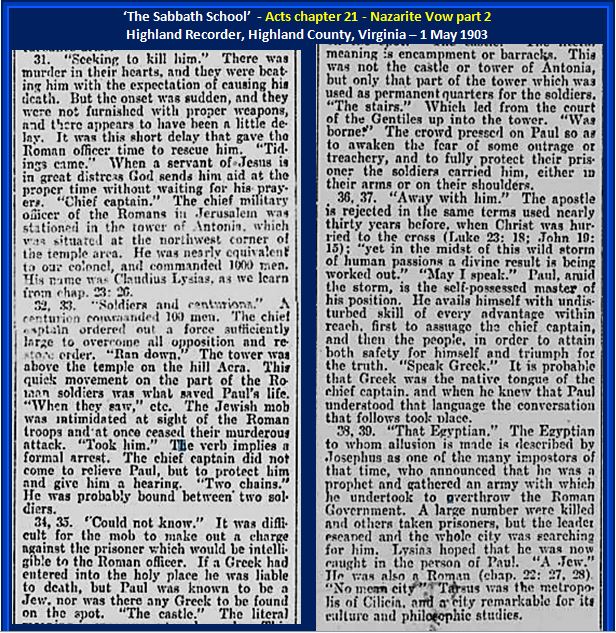
In the ‘Acts of the Apostles’ Saint Paul is described as
being a leader of the Nazarites.Paul
must have had longhair and have worn some sort of headband or crown in ordered
to be identified as a Nazarite.Here the
Tyndale version of the bible uses the word Nazarite and the King James uses the
word Nazarene.
“We
have founde this ma a pestilent felowe and a mover of debate vnto all the Iewes
thorowe out the worlde and a mayntayner of ye secte of the Nazarites”Tyndale Acts 24:5
“But
that I be no further tedious to thee, I desire thee of thy clemency to hear us
in few words. We have found this to be a pestilent man, and raising seditions
among all the Jews [Judeans] throughout the world, and author of the sedition
of the sect of the Nazarenes.” DR Acts 24:5
“invenimus
hunc hominem pestiferum et concitantem seditiones omnibus Iudaeis in universo orbe et auctorem seditionis sectae Nazarenorum”
LV Acts 24:5
“For
we have found this man a pestilent fellow, and a mover of sedition among all
the Jews [Judeans] throughout the world, and a ringleader of the sect of the Nazarenes:”
KJV Acts 24:5
There are early oil paintings of Paul with longhair as shown
below.There are also many paintings of
him with short hair. I am inclined though to think that he was a longhaired
Nazarite. I wonder if the halo above his
head is a sign of being a Nazarite since they are supposed to wear some sort of
crown or headband.
The 1841
English Hexapla does show that the Tyndale, Cranmer, Geneva, and Rheims bibles
used the word Nazarites. The King James
Authorized Version was the first to use the word Nazarens.
1 Corinthians - St. Paul Regarding Hair Length
In Paul’s letter to the Corinthians he talks about the
length hair.The next time you read the entirety
of 1 Corinthians chapter 11 picture Paul with long hair making these
statements.Paul is actually asking the
Corinthians to judge or decide from themselves and he is asking them a
question.
The Amish and Mennonite women never cut their hair and
always cover their hair with a cap because of Paul’s statements here in 1
Corinthians. I visit with the Amish and Mennonite women personally and have
discussed this with them.The Mennonite
women that I purchase my milk from states she has only trimmed her hair once
and her daughter’s hair has never been trimmed.
Long Hair in the News
I did a search in the newspaper archives to see what could
be learned and the articles are reflected below.
This section shows old oil painting I found that reflect men
with long hair. There were probably lots
more long haired kings.
451 - Merovingian Dynasty
Merovech founded the Merovingian dynasty of ‘long haired kings
‘that ruled the Franks. His famous
grandson Clovis I (ruled c. 481–511) united all of Gaul under Merovingian rule. According to British Israelism, Merovech is
descendant to Judah’s son Zarah.
These pictures show how the different ranks of people
dressed and wore their hair.
Notice how the women of the lower rank style their hair so
that it circles their head like a headband.
1002 AD – King Brian Boru of Ireland
High King of Ireland Brian Boru shown with longhair and
beard. He is shown standing by King David’s harp and the Lions of Judah.
One of the earliest and most well-known depictions of Brian
on the front piece of the 1723 publication of "The General History of
Ireland" translation of Keating's " Foras feasa ar Éirinn" by
Dermot O'Connor.
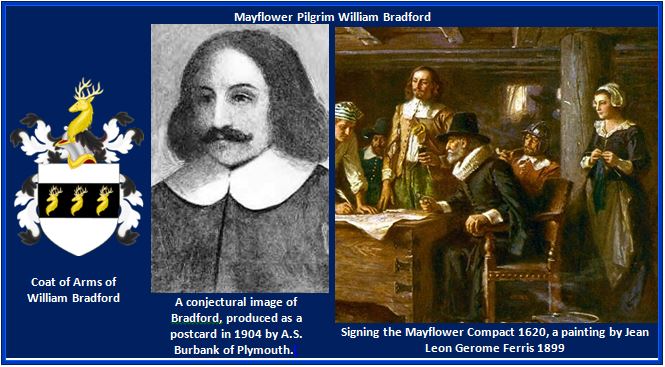
William Bradford was a Mayflower Pilgrim and the colonial
governor of the Plymouth colony. He also
was a judge, treasurer and chief magistrate.
William had shoulder length hair.
Maybe the hippies were right?Bring back the head bands and long hair of
the past.Be dedicated to our Father who
is in Heaven.Men will then be like
Sampson and will regain strength you once had.I did notice that many of the Nazarites in the bible were first born; I
do not believe that only the first born can be a Nazarite since I did not find that
stated in the law.I’m not sure that any
of the groups of people below understand today what the longhair and headband
represented.
Longhair and Headbands is the visual sign
of the vow of separation from uncleanness and dedication to our Father in
Heaven.